
Chimney Services
Chimney mortar repair in Geigers Landing, in detail
Damp joints with no standing water
Brick that is bone dry wicks water out of new mortar too fast, and the bond suffers. Technical Note 46 recommends dampening the joints before repointing but letting the brickwork absorb all surface water first. The Park Service brief puts it the same way: damp at the time of filling, with no standing water present.
Getting that balance right depends on the day, the sun on each face of the chimney and how absorbent the brick is. Our crew adjusts as the work moves around the chimney, which is one reason careful repointing on a home in Geigers Landing is never rushed to fit a clock.
Packing chimney joints in thin layers
Deep joints are filled in stages. Technical Note 46 calls for packing the mortar tightly in layers no more than 1/4 inch thick, and the Park Service brief explains that each layer is left to reach thumbprint hardness before the next goes on, because most mortar shrinkage happens while it hardens.
Layering keeps shrinkage in each thin lift instead of in one thick plug that pulls away from the brick. The brief also says that where old mortar comes out deeper than about an inch, those deep pockets get filled first. Our specialists follow that sequence so the finished joint is solid from back to face.
The brick courses just below the crown
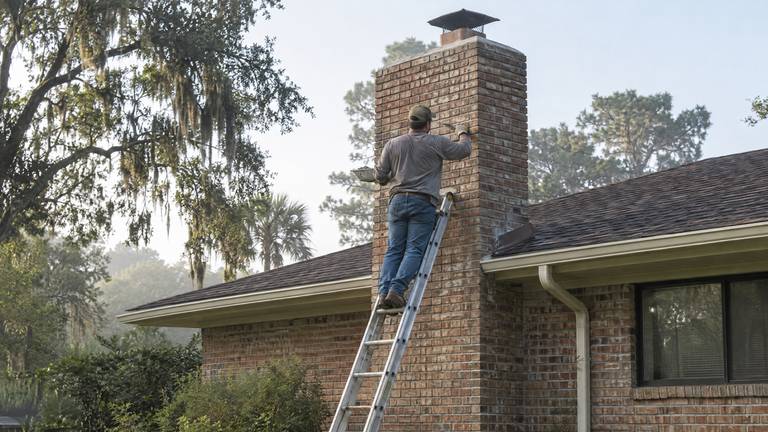
The top courses of a chimney stand in the open on every side, and any water that gets past the crown runs straight down into them. The crown and cap sit on this part of the brickwork, so loose joints here are worth repairing before they spread.
Our crew repoints the upper courses with the crown and cap in view. If the crown is cracked or the cap is letting water in, new joints below it will be soaked again, so those findings are priced as separate repairs next to the joint work.
Weather and curing for new chimney joints
Heat and sun change how fresh mortar sets. The Park Service brief notes that wall temperatures between 40 and 95 degrees F prevent freezing or excessive evaporation of the water in the mortar, and it recommends working in shade, away from strong sunlight, to slow drying in hot weather.
For high-lime mortars the brief also describes light misting for a day or two after tooling so the joints do not dry out too fast. Our crew plans the work on your chimney around sun, heat and rain, and we tell you what care, if any, the new joints need once we leave.


