
Chimney Services
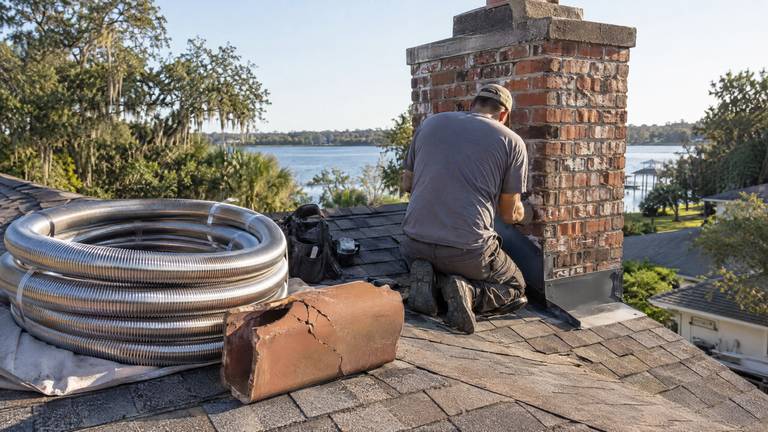
Relining the chimney from top to bottom
Every liner is sized to the appliance it serves, and the full system is priced in writing first.
Offsets and changes in direction
An offset shifts the flue to one side between the fireplace and the roof. The building code limits offsets in masonry chimneys, and at the bend the usable space inside the flue is smaller than at the top or bottom.
We check offsets during the route test and choose a liner that can make the turn without losing its shape. When an offset is too tight for the size the appliance needs, we explain the alternatives before any work is booked. The route test result is shared with you, so the reason for the chosen size is clear.
The top plate and how it is fastened
The top plate sits on the crown and carries the weight of the liner. One maker's instructions call for it to be fastened with silicone or masonry screws and for the liner to be cut flush at the top.
A top plate on a cracked crown or loose tile will not seal. We make sure the surface under it is sound, fasten the plate to the instructions and seal it so rain runs off rather than into the chimney. The seal between plate and crown is what keeps rain from running down between the liner and the old flue walls.
Connecting the liner to the appliance
The bottom connection joins the liner to the appliance outlet through an adapter, a connector or an insert collar. The appliance's instructions and the code in force set the clearances and the parts that may be used there.
We plan this connection before the liner is ordered, since it can decide the liner size and the parts needed. Moving an appliance for access is planned with protection for the floor and the hearth. The connection is the part of the system you see every day, so it is finished neatly and left accessible for inspection.
Protecting the room during relining
Relining involves work at the roof and at the fireplace, with debris coming down the flue. Furniture and rugs near the fireplace are covered, and the hearth area is protected before work begins.
We explain how long the work area will be in use and what you should move beforehand. At the end, the fireplace area is cleaned and the installed system is shown to you before we leave. Pets and children are kept clear of the work area while the flue is open.


