
Find the fault before replacing parts
The location of a symptom gives us a starting point, not an automatic diagnosis. Smoke at the opening can involve airflow or the exhaust route. Crumbling material may come from the firebox, the chimney above it or a factory-made panel. A control that fails to respond raises a different set of questions. Tell us what changed and whether the fireplace was operating when it happened.
Our fireplace service separates those possibilities before recommending work. Photographs taken from a safe position can help with preparation, but they cannot establish the condition of concealed components. We assess accessible parts and explain any additional access needed. You get a recommendation tied to what was found, rather than a replacement part selected solely because the symptom sounds familiar.
Repair a masonry fireplace with compatible materials
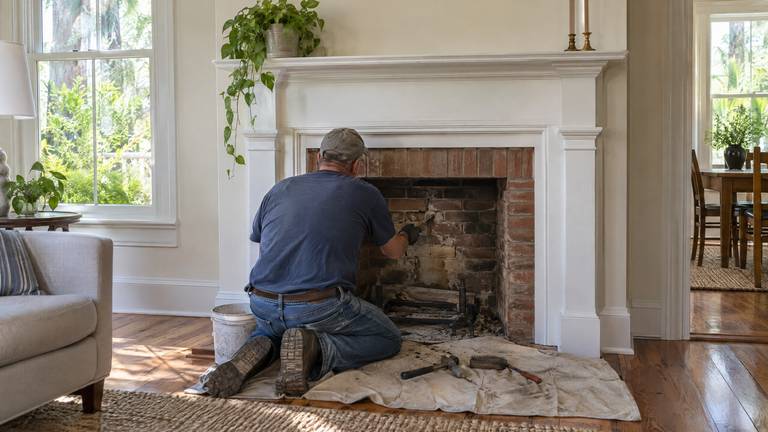
Masonry fireplace repair addresses the construction around the fire, including firebrick, joints and the relationship between the opening and the exhaust passage. Material inside this heated area must suit its job. Ordinary decorative mortar or a surface patch should not be assumed suitable simply because it can fill a visible gap.
Wood burning fireplace repair may involve an isolated damaged section or a more extensive assessment of the structure. Loose material, a changing crack or evidence of movement calls for attention to the cause. The applicable fireplace construction provisions in Florida Building Code Chapter 10 inform the assessment. Our firebox repair service focuses on the chamber itself, while chimney work is identified separately when necessary.
Respect the original factory-built system
A factory-built fireplace is an assembly with model-specific requirements. Its firebox, panels, chimney connection and clearances cannot be treated as interchangeable with the parts of a site-built masonry fireplace. A replacement panel that appears to fit may still be wrong for the appliance. Finding the model information is therefore a useful early step.
Keep any original manual or prior service information available. We compare the proposed repair with the manufacturer's instructions and the availability of compatible components. If a part has been discontinued, we explain what can be verified before proposing a substitute.
An improvised metal patch or altered panel is not a reliable way to preserve the original system requirements.
Address the hearth and moving components
The hearth provides a working surface around the opening, and damage there deserves more than covering it with a rug or a new decorative finish. Loose pieces, gaps or movement can affect how the fireplace is used. Hearth repair considers the affected area and its relationship to the fireplace instead of assuming that every visible tile problem is only cosmetic.
A damper also needs the correct range of movement and attachment for the system. For wood fireplace repair involving a stuck or damaged damper, we assess its condition and operating mechanism before deciding whether repair or replacement makes sense. Do not force an unfamiliar control or operate the fireplace when you cannot establish that the required exhaust path is open.
Route gas and electric faults to the right service
Our fireplace repair company handles the initial conversation even when you are unsure which type of unit you have. Describe whether it burns wood, uses a gas supply or produces an electric flame effect. Gas appliance faults belong with gas fireplace repair because their burners, controls and safety devices require a different service approach.
Electric fireplace service also depends on the model. A failed heater, damaged cord or unusual smell should not be investigated by opening energized components. Stop using a unit that appears damaged and arrange assessment.
Electrical supply work may need an electrician. Identifying the appliance accurately helps keep a fireplace fix focused on the actual equipment rather than treating every illuminated flame display as a gas or wood system.
Keep surrounding work from creating new problems
Tell us if the room is being redecorated, the fireplace face has been changed or cabinets have been added nearby. Finishes can hide required service access or alter the space around a hot surface. We review relevant conditions before work proceeds, especially when a new material has been placed against an existing appliance.
Removing a decorative facing is not automatically included in a component repair. If access requires opening finished material, we explain that before starting and identify who will restore it. Protection for the hearth and nearby furnishings is part of planning the work area. Keep children and pets away while components are removed or tools are in use.
Decide when replacement is the better route
A repair is useful when it restores an identifiable function without depending on unsuitable retained parts. Widespread deterioration, inaccessible damage or an unavailable essential component can change that calculation. We explain the limitation rather than promising to keep every old fireplace operating regardless of its condition.
When replacement is appropriate, the project extends beyond removing the visible unit. The connection, clearances, surrounding construction and applicable approvals need to be considered again. You can compare a repair recommendation with fireplace installation using the actual findings. A new appliance should solve the original problem and fit its location, rather than merely covering the opening left by the old one.
Schedule a local fireplace repair visit
Call (645) 465-4122 with the fireplace type and the issue that needs attention. If it is a factory-built appliance, share the make and model when available without dismantling anything to find them. Our family-owned team begins with a free inspection, explains the proposed work and provides an upfront price. The inspection does not make replacement parts or repair labor free.
After the repair, we review operating or curing instructions that apply and identify any unfinished work before use. Fireplace maintenance can then be planned around the equipment and what the visit revealed. For an uncontrolled fire or a carbon monoxide alarm, leave the building and call 911 from outside first. Ordinary repair scheduling follows the emergency response.


