
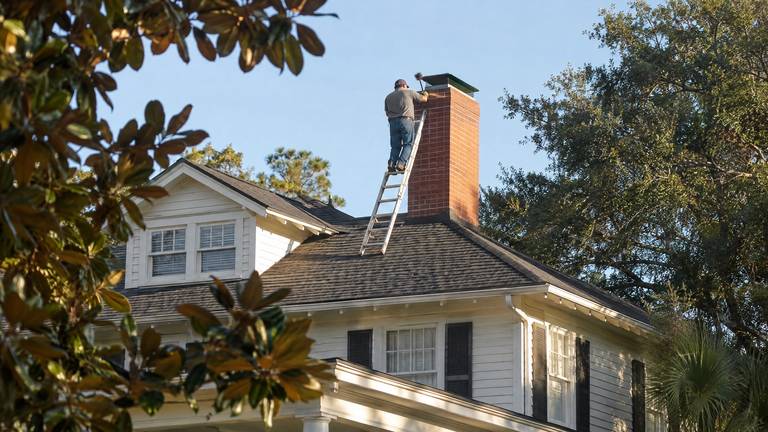
Fix chimney damage with the whole system in view
The exposed stack, roof junction and flue do different jobs, but a fault in one can affect another. Water entering at the top may leave marks below the roof. Movement in masonry may disturb an otherwise serviceable connection. Fireplace chimney repair therefore begins with the path through the whole assembly, rather than assuming the first damaged surface is the entire problem.
Our chimney repair company looks at the visible condition and the history you describe. Tell us when the change appeared and whether it follows rain, fireplace use or other work on the home. We separate confirmed defects from areas that need further assessment. That gives you a repair plan connected to the symptoms you called about, without treating every chimney as a rebuilding project.
Keep sound material where it can stay
A repair can be limited to a component or a defined area when the surrounding structure can support it. Replacing damaged material should restore a useful function: keeping water out, securing a loose part or rebuilding a deteriorated section. Covering an unstable surface with a new finish does not provide the same result.
We explain what is staying and why. A sound lower stack may support work above the roof, while widespread deterioration can require a different approach. The choice depends on findings at the property, not simply how old the chimney looks. If damage extends beyond what can be evaluated during the initial visit, we identify that uncertainty before proposing a complete repair.
Choose the right repair family
A missing rain cap, a failed crown and deteriorated flashing can all expose a chimney to water, but they are separate components. Our chimney cap replacement, chimney crown repair and chimney flashing repair pages explain those jobs in more detail. The inspection establishes which work applies to your home.
Chimney damage repair can also involve brickwork or the passage carrying exhaust. Exterior masonry work does not automatically correct an interior lining defect. Likewise, a new liner does not stabilize loose masonry. When two repairs are necessary, we describe how they relate and which order makes sense. This avoids treating one visible improvement as proof that every part is ready for use.
Arrange chimney and roof repair together
The junction between the roof and chimney deserves coordination when either side is being changed. Tell us if a roofer is already scheduled, if the roof was recently replaced, or if another contractor has opened material near the stack. Those details help prevent completed work being disturbed again unnecessarily.
We identify the chimney portion of the project and any roofing work requiring a separate trade. Access, temporary weather protection and the final connection need to be understood by everyone involved. A coordinated repair does not mean that every roof defect belongs to the chimney contractor. It means the adjoining work has an agreed boundary and sequence so a gap is not left between two otherwise finished jobs.
Plan access before the workday
A tall chimney or an obstructed side yard can change the way materials and equipment reach the repair. Share information about locked gates, delicate landscaping, nearby equipment and places that must remain accessible. You do not need to climb up or remove a cover to help us prepare.
For work around the fireplace, we discuss protection for the hearth and nearby floor. Keep the appliance unused before the appointment and follow the team's instructions about cooling time. Pets and children should remain away from the work area. If access is restricted by a built-in cabinet, finished enclosure or other construction, we explain what can be examined and whether another step is needed.
Understand the repair result
The completed work should correspond to the defect it was intended to correct. We walk through the repaired area and explain any remaining maintenance, curing or appliance-use instructions. A fresh exterior finish is not a substitute for confirming that the relevant chimney and fireplace components are suitable for use.
Chimney restoration may leave an appearance difference between retained material and new work. We discuss practical matching limits rather than promising that weathered masonry will look newly built. If moisture previously marked an indoor surface, repainting or replacing that finish is separate from stopping the entry point. Let the affected material be assessed before concealing evidence of continuing dampness.
Put priorities ahead of appearance
Some findings can wait for planned maintenance; loose material, suspected structural movement or a damaged exhaust passage may require the fireplace to remain unused. Our local team explains the priority of each item in plain language. You should know what needs attention now, what can be scheduled and what further information would change the recommendation.
Do not operate the fireplace as a test after a suspected chimney fire or impact. If there is an uncontrolled fire or a carbon monoxide alarm, leave the building and call 911 from outside. Once the immediate emergency is addressed, repair planning can begin. Our emergency line is available around the clock for urgent chimney concerns, with appointment availability confirmed when you call.
Book a chimney repair contractor in Seminole County
Our family-owned team offers a free inspection and a written estimate before chimney repairs begin. The price identifies the work being proposed, the materials involved and any coordination with other trades. No hidden fees means you can understand the agreed job before deciding to proceed. New customers receive 10% off their first service.
Describe what needs attention when you call (645) 465-4122, even if you do not know the name of the damaged part. We can start with a stain, loose debris or a change in how the fireplace behaves. A clear explanation is more useful than trying to diagnose the chimney from the ground. We will arrange a visit and help you choose the next step.


