
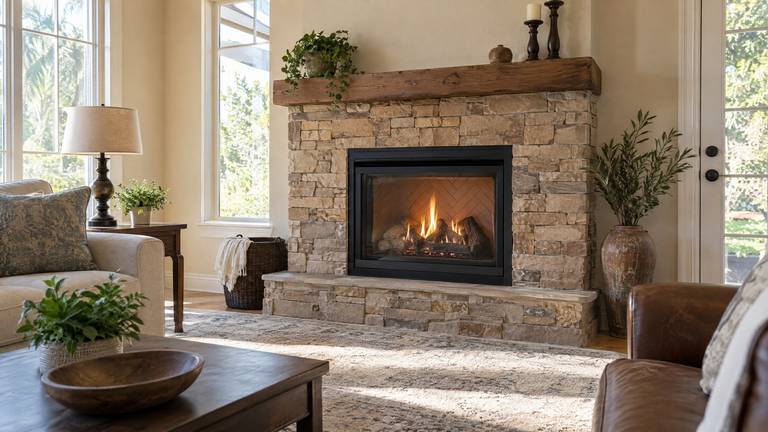
Choose the appliance around the room
The appearance of a new gas fireplace matters, but its installation requirements determine where it can go. The opening, nearby materials, service access and available vent route all need attention before a model is confirmed. We review those conditions together so a preferred style does not create an unresolved construction problem.
Bring the product information if you already have a unit in mind. Otherwise, describe the intended location and what you want the fireplace to provide. An appliance selected for one enclosure may not suit another, even when the visible dimensions are similar. The actual manufacturer's instructions govern the work, including any limitations on finishes placed around the opening.
Plan direct vent gas fireplace installation
A direct-vent appliance uses its specified vent system for combustion air and exhaust. The permitted route, components and termination depend on the model. A convenient opening through a wall does not establish that the vent can terminate there, and a short route still has to satisfy the instructions.
We consider the complete path before closing framing or finishes. Changes in direction, the position of nearby openings and access to the termination can affect the design. The approved components must be used as a system.
Direct-vent parts should not be mixed with B-vent or another vent family merely because a connection appears possible.
Recognize other vented gas arrangements
Some gas appliances use a different venting arrangement, including models designed for a B-vent system. Their requirements are not interchangeable with those of a direct-vent unit. The gas fireplace installer must establish the actual appliance type and follow the corresponding instructions for its exhaust path and installation conditions.
An existing chimney or vent cannot be assumed ready for a new appliance. Its type, condition and compatibility need assessment. When a route requires changes, our gas fireplace venting work identifies the applicable components and any adjoining construction. Reusing a passage should be a supported installation decision, not a way to avoid examining it.
Confirm the fuel and supply responsibilities
Natural gas and propane equipment must be configured for the intended fuel. Propane fireplace installation therefore begins with confirming the model and its supported configuration, not simply connecting it to an available supply. A fuel conversion is appropriate only when the manufacturer expressly supports it with the specified procedure and components.
Gas-supply work needs the appropriate gas contractor or utility involvement. We identify that responsibility in the project plan and coordinate the appliance requirements. Our gas fireplace installation service does not make an unsupported claim to install new gas lines.
The supply must be suitable for the selected equipment before the appliance is commissioned.
Keep required clearances within the finished design
The space behind a fireplace face is as important as the finish you see. Framing, insulation, electrical connections and decorative materials must follow the appliance requirements. Covering a required gap or service opening can create a problem even when the room looks complete.
We discuss the hearth, mantel and facing with the intended model in hand. A material described as noncombustible does not automatically make every placement acceptable; the instructions still define the assembly. If another contractor is building the surrounding finish, the installation details should be shared before that work starts.
Access for later service also belongs in the design. A component that can be installed before the wall is closed may still need to be reached after the fireplace is in use. Planning that access avoids unnecessary damage to a finished room when maintenance is required.
Distinguish a fireplace from a gas insert or log set
A complete gas fireplace, an insert and a gas log set are different products. An insert is intended for a suitable existing fireplace and has its own vent and fitting requirements. A log set depends on the host fireplace and the instructions for the set. None should be selected solely because it occupies approximately the same visible space.
Our gas fireplace insert installation and gas log installation pages explain those alternatives. During the initial visit, we help identify which project matches your existing construction. That keeps a replacement or conversion conversation from overlooking the parts that will remain behind the new appliance.
Agree on approvals and the work sequence
Permit and inspection requirements depend on the property and the work proposed. We discuss the applicable approval process before installation rather than assuming that every gas fireplace install follows the same route. Keep any prior appliance or permit records available; they can help establish what exists but do not guarantee that retained work is suitable.
The sequence may involve framing, gas supply, electrical work, appliance installation and finishing. Each task needs a clear responsibility and a sensible handoff. We identify those dependencies in the proposal so the fireplace is not enclosed before required connections or inspections are complete. Appointment and material availability are confirmed for the actual project.
Know what is ready before the first use
The completed appliance needs the model-specific installation and operating checks before normal use. We explain the controls and any initial operation instructions supplied by the manufacturer. Keep the manual and model information accessible after the work. A finished surround alone does not establish that the gas fireplace is ready to operate.
Ready to review a proposed gas fireplace? Contact (645) 465-4122 for a free inspection of the installation location. Our family-owned business provides an upfront price for the agreed installation and identifies separate trade work clearly. If you are replacing a malfunctioning gas unit, leave it off while planning the project. Suspected gas requires leaving the building and calling the gas utility or 911 from outside first.


