Assess more than the surface crack
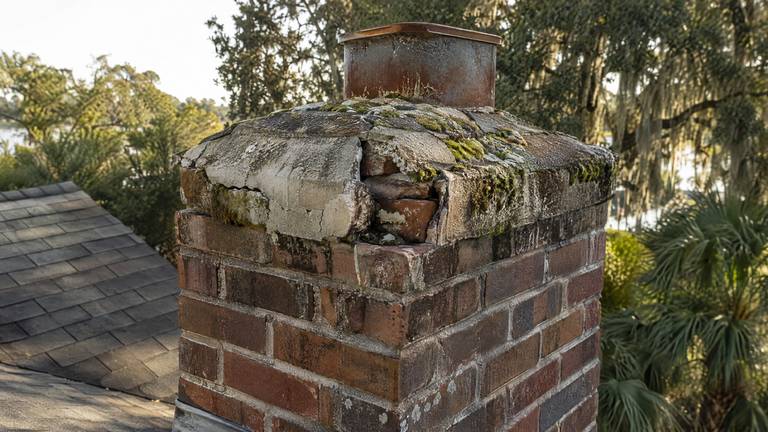
A crown may have a small isolated defect, several separated areas or material that is crumbling throughout. Its slope, edges and connection around flue openings also matter. A surface treatment cannot make an unsound top structurally sound, so the assessment considers the base material as well as the visible lines.
We examine the accessible crown together with the masonry immediately below it. Deteriorated brickwork can affect the repair plan, and a leak may involve another component. Tell us about water indoors or pieces that have fallen near the chimney. Those observations help connect the top's condition to the problem you want addressed.
You should not climb up to touch the crack or remove loose pieces. The exposed top can be difficult to reach, and disturbing weak material can create another hazard. Our team plans access and evaluates what can safely remain before deciding how the crown should be restored.
Choose chimney crown sealing only for a suitable base
Chimney crown sealing or a chimney crown coating can be considered where the underlying crown is sound and the selected product is appropriate to the defect. Surface preparation, weather conditions and application requirements come from that product's instructions. More material is not automatically a better repair if it is being applied to a weak or incompatible surface.
We explain what the treatment is intended to address and which existing defects it cannot correct. A coating should not be used to bridge a structural failure or conceal loose masonry. If the condition calls for removal and rebuilding, the proposal should say so rather than present a surface coat as equivalent work.
Ask whether earlier coatings are compatible with the proposed material. Peeling or contaminated surfaces may need preparation before a new product can bond as intended. The workday conditions and curing period also matter. You receive the relevant use and care instructions when the job is completed.
Rebuild a crown that cannot be retained
Chimney crown replacement removes failed material so a new top can be formed on suitable support. Water-shedding shape, edge details and the relationship to the flue are considered together. The finished top should direct rain away from the masonry rather than leave standing water or an exposed vulnerable joint.
A chimney crown rebuild also requires protection for the openings and surrounding roof while the area is being worked on. If removal reveals deterioration beneath the old top, that condition needs to be addressed before the replacement is completed. We describe any additional masonry work as a separate finding and decision.
The chimney's shape and number of flues affect how the replacement is formed. A detail suitable for one stack may not fit another. Our team bases the work on the actual chimney construction and applicable requirements, using the relevant material instructions. The goal is a serviceable top, not merely a smoother-looking layer over the previous failure.
Keep the crown separate from the cap
A chimney cap sits above a flue opening, while the crown covers the masonry around it. They can need attention at the same time, but replacing one does not automatically repair the other. We inspect their visible relationship so a cap mounting problem is not overlooked during crown work.
If a cap or another fitting must be removed and reinstalled, its condition and attachment need to suit the completed crown. Damaged or unsuitable hardware should not be put back solely because it was there before. Where chimney cap replacement is recommended, that work is identified separately.
Flue components can also expand and move differently from the surrounding top. The appropriate construction detail must account for that relationship. We do not fill every visible separation indiscriminately; the actual assembly and its intended detail guide the repair.
Coordinate the crown with nearby masonry repairs
Cracked chimney crown repair sometimes accompanies work on the upper brick courses. If those courses are loose or deteriorated, a new crown above them does not correct their condition. The inspection establishes whether work on the support is needed before the top is formed.
Mortar crown repair needs the same distinction between the material being repaired and the structure carrying it. A thin earlier wash that has broken down may require a different replacement detail instead of another thin patch. We explain what the proposal retains, what is removed and how the renewed top connects to the sound chimney below.
For a larger project, the sequence may involve masonry first, then the crown and cap arrangement. Keeping that order clear avoids disturbing newly completed work to correct something underneath. Roof protection and cleanup are considered throughout, especially where pieces of the old crown need to be removed.
Book your crown assessment in Seminole County
Contact Seminole County Chimney at (645) 465-4122 to arrange a free inspection. Describe any visible missing material or indoor moisture, and mention earlier treatment if you know about it. A previous repair receipt can help identify the product or work performed, but the current condition still determines the recommendation.
Crown repair starts with a written price identifying the work agreed for your chimney. We discuss access, removal, preparation and the proposed repair material so you know what the job includes. Same-day service is available when the schedule and the work allow it; a crown requiring curing or material preparation may need a planned return.
Our workmanship warranty backs the completed crown repair. At handover, ask about curing, fireplace use and any remaining recommendation. Report fresh water entry if it appears later, since a chimney can have more than one moisture path even after the crown has been repaired.


