
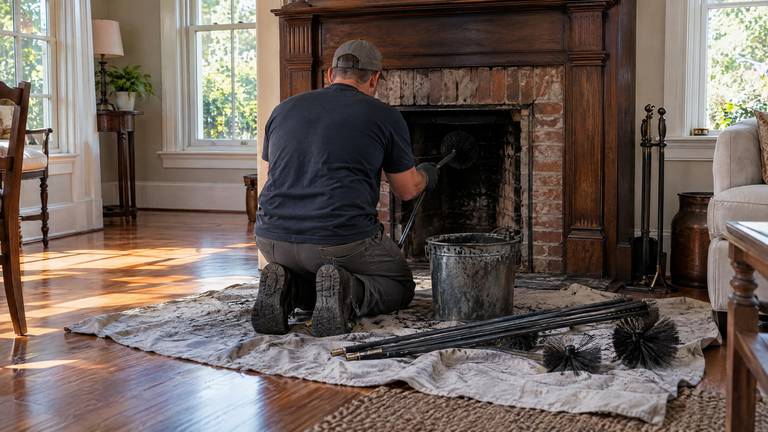
Connect fireplace chimney cleaning to the full passage
Chimney cleaning reaches beyond the ash lying in the firebox. Deposits can collect in the flue, around the damper and in spaces above the fireplace opening. The accessible parts, their shape and the type of buildup determine the cleaning tools and approach. We plan the work around the actual chimney rather than treating the visible opening as the whole job.
Chimney flue cleaning removes material from the passage carrying exhaust. Fireplace cleaning addresses the accessible fireplace area and debris associated with that work. These related tasks belong in one conversation, but they are not interchangeable with gas appliance servicing or repairs to damaged lining. Tell us which fireplace or stove connection you use so the appointment matches the equipment.
Protect the room before brushing starts
The work area is prepared before deposits are disturbed. We discuss access to the fireplace, floor protection and keeping nearby furnishings away from the opening. Debris containment is part of chimney sweeping, rather than an extra step left until cleanup. You should not have to dismantle the fireplace or climb to the roof before our arrival.
Let the fireplace cool fully and stop using it before the scheduled visit according to the team's instructions. Tell us about an insert, unusual screen arrangement or a difficult-to-reach opening. If a component needs removal for access, that decision should be made with its condition and reassembly requirements in mind. Leave hot ashes and unfamiliar fittings alone.
Distinguish brushable deposits from glaze
The condition of the deposit matters as much as the amount. Loose soot and accessible removable creosote can respond to mechanical cleaning. A hard, shiny or tar-like layer may need a different treatment. The team explains the difference if it is encountered, rather than assuming a standard brush pass has removed everything.
Heavy or glazed deposits belong to our creosote removal service. That work can require its own assessment and treatment plan. A sweeping appointment does not promise that every hardened layer can be removed immediately. If material remains or the flue surface cannot be adequately assessed, we explain the limitation and the next step before recommending use.
Handle a blocked chimney carefully
Restricted exhaust flow can arise from deposits, fallen material or an obstruction. A blocked chimney should not be tested by lighting another fire. Sweeping may remove a suitable deposit, but damaged components and occupied animal nests raise different issues. We identify what is accessible and choose the appropriate next action.
Sounds or movement inside the chimney should be mentioned when arranging service. Do not use smoke or fire to drive wildlife out. Animal identification and applicable protection rules may determine when an obstruction can be removed. Cleaning follows the appropriate wildlife response rather than sealing an occupied passage. This keeps chimney soot removal separate from work requiring a different method or timing.
Discuss odors without promising a fragrance fix
Chimney odor removal starts with understanding the odor and when it appears. Deposits, moisture and airflow can all influence what you notice indoors. Removing contaminated debris may help, but a cleaning alone cannot promise to correct every source of smell. Tell us whether it occurs during rain, when the fireplace is cold or while another appliance is operating.
If the smell suggests gas, leave the building and contact the gas utility or 911 from outside first. A carbon monoxide alarm also requires leaving and calling 911. Those situations are not ordinary cleaning requests. For a persistent non-emergency chimney odor, the cleaning findings may point to a leak or ventilation concern that deserves separate assessment.
Arrange wood stove chimney cleaning
A wood stove connection can change access and introduce its own connector, baffles or other removable parts. Identify the appliance and describe how it connects to the chimney when you book. The appliance instructions guide disassembly and reassembly; a component should not be forced out merely to create a convenient brush path.
Wood stove chimney cleaning addresses the appropriate exhaust passage and accessible connector arrangement. Repairs to the appliance or replacement of a damaged chimney system are separate recommendations. We tell you which parts were cleaned and what was not accessible, so you do not mistake a clean visible connector for an assessment of concealed parts farther along the route.
Follow cleaning with useful findings
Chimney sweeps can expose defects that deposits previously covered. Missing material, deterioration or another concern found during cleaning needs to be explained in relation to the intended use. A chimney sweep and inspection can be arranged together, but brushing the flue does not itself prove that every component meets its requirements.
We describe the visible result, any remaining buildup and any repair recommended before use. Keep the appliance instructions with your service information so a future change in fuel, appliance or operation can be assessed properly. Chimney maintenance is easier to plan when you know what the previous visit actually included rather than simply keeping a receipt labeled cleaning.
Set up your Seminole County chimney cleaning service
Call (645) 465-4122 with the type of fireplace, the last known service and any problem you have noticed. If more than one opening needs attention, mention each one so we can allow for the work. An unused fireplace may still need examination before it returns to use; lack of recent fires does not confirm that the passage is clear.
Our family-owned business begins with a free inspection and explains the proposed chimney cleaning service before work proceeds. Cleaning and any repairs are priced separately from that free inspection. Same-day service is available when the schedule permits, and new customers can get 10% off their first service. We finish by reviewing what was cleaned and what needs attention next.


