
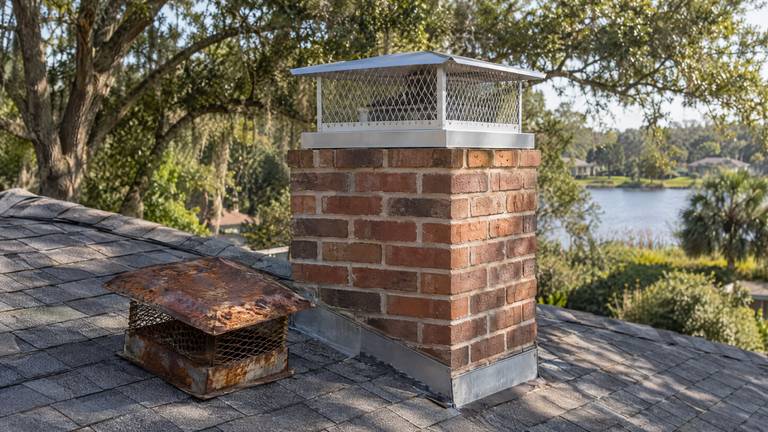
Identify the cover you actually need
The word chimney cover can describe different parts. A rain cap protects a flue opening. The broad metal top on a framed enclosure is a chase cover replacement job. The concrete top around masonry flues is the crown. Naming the part correctly prevents ordering a small cap for a problem involving the entire enclosure.
You do not need to identify it yourself before calling. Tell us whether a cover is missing, loose, rusted or making noise, and whether water or debris has appeared indoors. We examine the actual top and distinguish the failed component from the material below it. A new cap should not be used to conceal a deteriorated support or another opening that still admits water.
Measure before selecting a new chimney cap
Flue dimensions, projection and the available mounting surface guide chimney cap installation. A replacement must fit without restricting the intended exhaust opening. A cap that looks close in size from the yard may not be suitable once the top is examined. We determine how it can attach before choosing the replacement.
Where a factory-built chimney is present, the system's specified termination matters. A decorative cover or generic cap should not replace an approved termination simply because it can be fastened over the pipe. Manufacturer instructions guide component selection and installation. We identify the chimney system and explain what is appropriate for that assembly rather than combining unapproved parts.
Compare single and multiple flue arrangements
A single opening and a group of flues can require different cap arrangements. A multi flue chimney cap may cover several masonry flues, but the layout must still allow the intended exhaust paths and access for maintenance. The condition of the crown and fastening area remains part of the decision.
For a chimney with more than one connected appliance, identify which openings are in use. A large cap should not imply that every flue below it has been inspected or repaired. We discuss the openings included in the installation and any visible defect that needs another service. This makes the new cap a useful protective component without overstating what the job covers.
Choose material for the actual installation
A stainless steel chimney cap and a copper chimney cap can offer different appearances and product details. Material is only one part of selection: dimensions, mesh, supports and the mounting design still need to suit the chimney. We explain the available product choice and how it will look against retained masonry or an existing enclosure.
Do not judge the replacement by shine alone. Corrosion, distorted metal and loosened connections on the old cap may show where maintenance or a different product detail is needed. The proposed replacement should address the observed failure and follow its installation requirements. Product availability and the condition of the mounting surface can affect which option is practical.
Keep the chimney screen clear and appropriate
A chimney screen can help exclude unwanted entry while allowing exhaust through the cap. Mesh and spark-arresting requirements depend on the intended use and applicable installation instructions. Adding finer mesh without considering that use can create a maintenance problem. We select the cap arrangement as a working assembly, not merely a decorative lid.
If an existing chimney spark arrestor is damaged or obstructed, we assess whether it can be serviced or needs replacement with a suitable component. Spark arrestor installation does not remove the need for chimney maintenance. Deposits and debris can still affect performance, so the cap must remain accessible for examination and cleaning. Ask how future maintenance can be carried out before choosing an oversized enclosure.
Repair a cap or replace the failed assembly
Chimney cap repair may be suitable for a limited attachment problem when the cap itself and its support remain serviceable. Torn mesh, perforated metal or a distorted assembly can favor replacement. The distinction should come from the condition found at the top, rather than a promise that every loose cap can be tightened and reused.
We examine the mounting surface alongside the cap. Fastening new metal to weak or crumbling material leaves the installation dependent on the same defect. If masonry or another support needs repair first, we explain that connection. A cap replacement should finish with a suitable fit and attachment, not just a different object covering the opening.
Check occupancy before closing an opening
Bird sounds, scratching or nesting material should be mentioned before the visit. An animal in the chimney can require identification and a response that follows applicable wildlife protections. The opening should not simply be screened shut while it is occupied. Do not light a fire to make animals leave.
Our team separates the cap project from any required animal-removal work. Once the opening can appropriately be closed, the selected cap can help discourage renewed entry. This sequence protects both the installation and the purpose of the job. A cap is useful prevention, but installing one is not a substitute for dealing with an existing obstruction or occupied nest.
Arrange a Seminole County rain cap visit
Call (645) 465-4122 to discuss a missing or damaged chimney rain cap. Keep away from fallen pieces and leave roof access to the service team. We start with a free inspection and explain the proposed cap, any necessary support repair and the price before installation. Our family-owned business offers 10% off a new customer's first service.
After the work, we review the component installed and any related condition that remains outside the cap project. Water that entered elsewhere may need additional investigation, even with a properly fitted cap above the flue. Tell us if a new leak or noise appears so the symptom can be assessed in relation to the completed work and the rest of the chimney.


