
Our Services
Chimney rebuilding explained for Geigers Landing
Questions every homeowner in Geigers Landing should have answered before a chimney rebuild.
How tall the rebuilt chimney must be
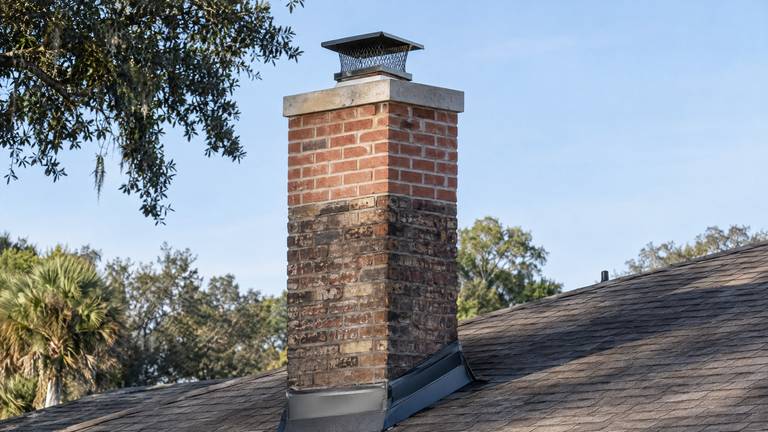
The Florida Building Code, Residential, sets a minimum height for chimney tops. The top has to clear the highest point where the chimney passes through the roof by at least 3 feet, and it has to sit at least 2 feet above any part of the house that lies within 10 feet.
A rebuild is the right moment to check that rule, since an older chimney may have been built short or cut down during an earlier roof job. Building to the required height keeps sparks and exhaust clear of the roof. We measure before we start and tell you if the finished top will stand higher than the old one.
Where a higher part of the house, such as a second story or a dormer, sits within 10 feet of the chimney, the extra height can be significant, and we show you the measurement behind the number.
Full-thickness walls in the new courses
Chimney walls must be at least 4 inches thick, nominal, under Florida's residential code, built of solid masonry units or of hollow units filled solid with grout. Rebuilt courses are laid to that thickness all the way around the flue.
Where a chimney holds more than one flue, the code also calls for masonry at least 4 inches thick between adjacent flue linings in most cases. We lay out the new courses around each flue before mortar goes down, so the rebuilt section matches the code and lines up with the chimney below it. Shortcuts such as thin brick slices never go into a rebuild of ours.
Where the old chimney was built thinner than the code now requires, we explain what the rebuilt section will need and how it will meet the older masonry below it.
When the chimney pulls away from the wall
A widening gap between a chimney and the wall beside it means one of them has moved. Brick industry guidance for single-wythe chimneys describes attaching them to the structure with corrosion-resistant metal ties, and those ties can rust through or pull loose over time.
Closing the gap with sealant hides the movement without stopping it. We look at where the gap is widest, whether the chimney is tipping away at the top and what is happening at the base. Then we explain whether new ties, a partial rebuild or a structural review is the right next step, and what each would involve.
We also measure the gap on the first visit, so if you choose to watch it for a while before deciding, there is a starting figure to compare against later.


