
Start with how the fireplace is used
Tell us what burns in the fireplace and how you have been using it. A wood fireplace, gas appliance and converted opening have different arrangements. A new appliance or fuel change can also affect the suitability of the existing venting. Knowing the equipment and its history helps the chimney inspection service address the right questions.
Mention smoke, odors, moisture, unusual operation and any previous chimney fire or impact. These details help direct the examination but do not replace it. A fireplace that seems to work can still have a defect, while a worrying stain may have more than one possible source. We distinguish what you observed from what can be established during the visit.
What the examination can establish
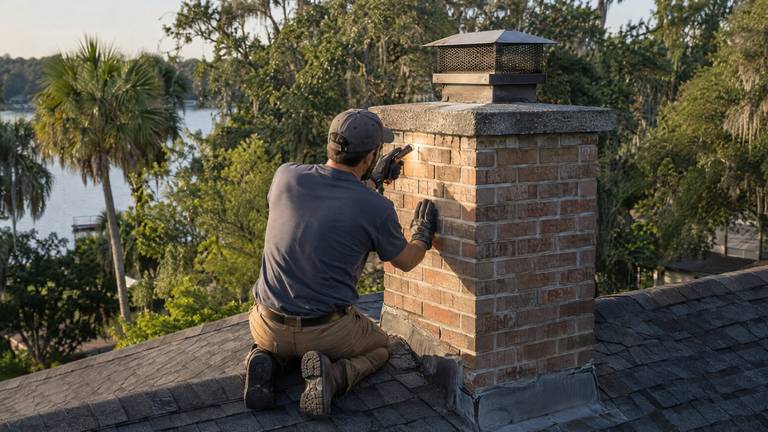
Fireplace and chimney inspection considers the visible structure, the accessible exhaust path and the way the appliance connects to it. At the fireplace we look for deterioration and conditions that affect use. Outside, the accessible top, masonry or enclosure and roof junction can provide evidence of damage or water entry.
The purpose is to understand related components rather than count isolated defects. A repaired top does not establish the condition of the flue below it. Similarly, a clean firebox does not tell us whether concealed construction has proper separation from combustible material. We explain what the examination supports and which areas cannot be evaluated from the available access.
Finished walls, enclosed chases, deposits or restricted access can limit what can be seen. An inspection should name those limits rather than treat unseen material as sound. If a concern requires further investigation, we explain why and what the next decision involves. No claim about an inaccessible component should rest solely on the appearance of an adjacent surface.
Cleaning may be required to expose a surface adequately. Opening construction may require a separate agreement and coordination with another trade. The appropriate response depends on the issue; it is not automatically the same for every home. You can ask which conclusions are firm and which are provisional before deciding on additional work.
Arrange a real estate chimney inspection
If an inspection is part of a sale or purchase, tell us about the deadline when booking. Provide the existing report or the specific concern that needs clarification. A real estate chimney inspection focuses on the relevant chimney and fireplace findings; it does not replace the other inspections associated with a property transaction.
For a chimney inspection for home sale, arrange access with the person authorized to admit the team. A seller's description of prior work can be useful background, but it is not a substitute for examining the present condition. We explain any recommended work on site and provide a written estimate for that work. Do not assume a visit guarantees a transaction outcome or approves unseen construction.
Inspection findings and the next step
A chimney check identifies concerns; a cleaning removes suitable deposits; a repair changes damaged material or equipment. Those actions can be related and may be coordinated, but they are distinct. We explain when the findings support a cleaning, a specific repair or further assessment before any additional work proceeds.
A free inspection does not make the cleaning or repair free. You receive the proposed price before agreeing to that work. If no repair is recommended for the parts examined, we say so. That conclusion applies to the scope of the examination and the intended use discussed, rather than promising that a fireplace can never develop a problem.
A chimney safety inspection includes attention to accessible conditions affecting heat and exhaust. Mantels, surrounding finishes and nearby stored items can change how the fireplace is used. An appliance's installation and operating instructions remain important because similar-looking equipment can have different requirements.
Do not move a safety barrier or alter an unfamiliar fitting to make access easier. Tell us about any remodeling around the opening, a change to the mantel or work near the vent route. The team can assess the relevant arrangement and explain whether the work has introduced a concern. Where the property needs a building official or another trade, that role should be identified separately.
Prepare for the visit without dismantling anything
Leave the appliance off and allow it to cool as directed before the appointment. Make a clear walking route to the fireplace and tell us about locked gates or other access restrictions. If you have the appliance model or instruction manual, keep it available. There is no need to take parts apart or climb onto the roof.
For more than one fireplace, mention each opening when you book. They may serve different appliances or use different flues. The inspection arrangement should identify what is included so one checked opening is not mistaken for a review of every system in the house. Pets and children should stay clear of the examination area.
Use the findings to plan confidently
We organize the findings around what matters for the home: a condition requiring the fireplace to remain unused, a repair to schedule, an item needing further assessment or routine maintenance. You can discuss the reason for each recommendation and the proposed sequence. That is more useful than receiving a vague warning without a next step.
If there is an uncontrolled fire or a carbon monoxide alarm, leave the building and call 911 from outside before arranging service. Suspected gas calls for leaving and contacting the utility or 911 from outside. Routine inspection is the next step only after the immediate danger is addressed.
Our Seminole County fireplace inspection appointments begin with a free assessment and plain explanations. Call (645) 465-4122 to arrange yours.


