
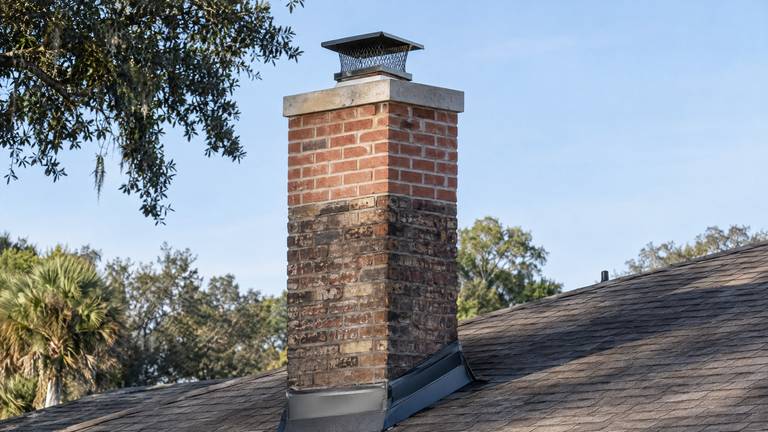
Establish where sound construction remains
Chimney rebuilding begins with the structure that will carry the renewed work. The condition of visible brick faces alone cannot establish the condition of concealed support. We look at deterioration, separation and displacement in relation to the part being considered for removal. If the support needs additional evaluation, that question must be resolved before a reconstruction plan is finalized.
A partial chimney rebuild can make sense where damage is limited and the retained section is suitable. It should not be chosen merely because it removes fewer bricks. The transition between old and new work needs an appropriate connection and a sound base. We explain those conditions so you understand why the proposed removal begins and ends where it does.
Rebuild a chimney above the roofline
Upper chimney sections are exposed on several sides and may need replacement while lower construction remains serviceable. To rebuild a chimney above roofline level, the work must account for the masonry, flue relationship, crown and cap arrangement. The roof junction also needs protection and a proper final connection.
The visible outline can often inform appearance choices, but structural and installation requirements come before copying a previous detail. Tell us if another roof project is planned. The sequence should avoid completing new flashing only to disturb it during removal or reconstruction. We identify the chimney work and any roof-side tasks requiring coordination.
Treat leaning chimney repair as a structural question
A chimney that leans or appears to separate from the house deserves assessment of the cause and support. Covering the separation or rebuilding only the exposed top may not address movement below. Keep people away from falling material and leave the fireplace unused where the structure or exhaust path is in doubt.
Leaning chimney repair may require information beyond a routine visual visit. We explain when further structural assessment is needed and how it affects the next step. A new upper section should not be presented as a solution to an unresolved foundation or support condition. The recommendation must connect the proposed reconstruction to the actual reason the chimney moved.
Plan the flue with the masonry
The exhaust passage and surrounding masonry have related but distinct requirements. Chimney reconstruction can expose a lining defect or require work to the lining as part of the project. Rebuilding exterior brickwork does not automatically establish that the passage is suitable for the connected fireplace or appliance.
We identify the existing fuel and equipment and discuss any planned change. If chimney liner installation is needed, that work belongs in the overall sequence. The top termination and connections must suit the completed system. Keeping these decisions together prevents a new exterior from hiding an unresolved problem inside the chimney.
Understand when a full chimney rebuild is proposed
More extensive deterioration may justify rebuilding beyond a small upper section. A full chimney rebuild is a substantial project that needs clear boundaries, access planning and consideration of adjoining construction. The term should describe the actual work rather than serve as a vague recommendation to replace everything visible.
Ask which structural components, fireplace elements and venting parts are included. Work inside finished rooms may require other trades or restoration outside the chimney contract. Applicable approvals and inspection requirements need to be established for the project. We explain the chimney portion and the coordination required before treating the work as ready to start.
Protect the home during removal and reconstruction
Removing chimney material requires control of debris, protection of surrounding surfaces and a safe route for equipment. The roof and fireplace opening should not be left exposed without an appropriate work plan. Weather, access and the condition of the material affect how removal proceeds.
Identify fragile landscaping, limited side access and spaces that must remain usable before rebuilding starts. Keep the work area clear of people who are not involved in the job. Do not attempt to loosen masonry in advance or use the fireplace while part of the system is being removed. The team will explain when work areas and the appliance can return to normal use.
New masonry and related products also need suitable curing conditions. The construction schedule should allow for those requirements rather than promise immediate fireplace use after the final brick is placed. We review the applicable care and operating instructions at handover.
Choose the appearance with realistic expectations
Brick size, texture, mortar joint profile and the shape of the top affect how a rebuilt section looks. Retained material has weathered, so new work may be visible even when a close match is selected. We discuss that difference before ordering materials rather than promise an invisible reconstruction.
A change in appearance must still preserve the required function. A wider decorative top, different enclosure or added feature can affect support and termination details. Those choices should be assessed as part of the design, not added informally once construction is underway. The finished chimney needs to work as a complete assembly.
Speak with a Seminole County chimney rebuild contractor
Call (645) 465-4122 to arrange a free inspection of the damaged chimney. Our family-owned team explains the findings and gives you a written proposal for the work supported by the assessment. You can ask about retained support, flue work, roof coordination and cleanup before deciding to proceed.
Our workmanship warranty backs the work we complete, with upfront pricing and no hidden fees. If a smaller repair remains a suitable option, we explain it; if it would leave an unresolved structural problem, we explain that too. The goal is a reconstruction decision grounded in the condition of your home.


