
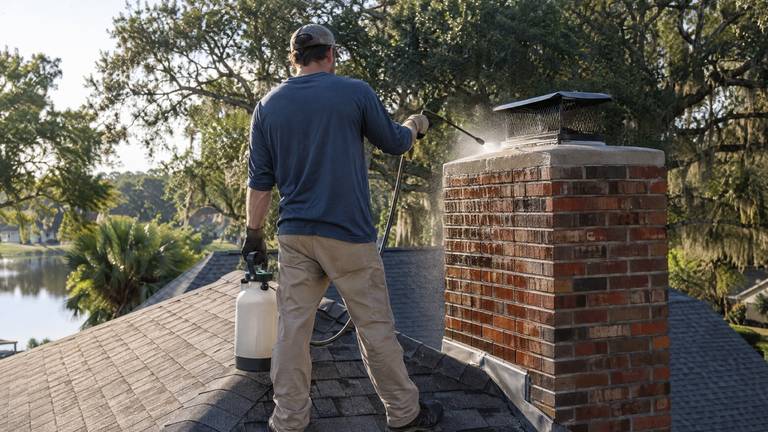
Can you waterproof a chimney in its current condition?
Loose joints, cracked units, failed top details and active water entry should be assessed before treatment. A liquid product does not replace missing masonry or restore a broken roof connection. The inspection establishes whether the material is a suitable candidate and whether another repair needs to happen first.
The type of masonry and any earlier finish also matter. Bare brick, painted surfaces and other materials do not automatically accept the same chimney sealer. We ask about previous work and examine the accessible surface rather than selecting a product solely by the word waterproof on its label. Compatibility is part of the job from the beginning.
Understand the role of a chimney water repellent
A suitable chimney water repellent can reduce rain absorption through the masonry surface while permitting the drying behavior described by the product. It is different from applying an impermeable decorative film. Product selection must consider the actual substrate and the manufacturer's preparation, application and curing requirements.
Brick chimney waterproofing should not be described as making the entire chimney permanently watertight. Joints, penetrations, the crown and the roof junction still have their own weather details. We explain the treatment's intended area and its limitations, so you can distinguish protection of a surface from repair of an entry path elsewhere.
Repair first where the surface is failing
If mortar is loose or brick faces are deteriorating, treatment alone leaves that damage in place. The repair may involve chimney tuckpointing or spalling brick repair, depending on the condition. The appropriate interval before treatment then depends on the repair material and the water-repellent instructions.
Do not cover recent damage just to improve the appearance before a visit. Its pattern can help the team understand what has happened. Likewise, a fresh coat over damp material may make evaluation harder without stopping the source. We discuss the sequence so newly repaired masonry can be prepared appropriately before a surface treatment is considered.
Address active moisture separately
For a currently leaking chimney, finding the entry point takes priority. Water may be entering at a top detail, flashing connection or damaged enclosure rather than through the face of otherwise sound brick. Broadly treating the exterior does not establish that the actual leak has been repaired.
Our chimney leak repair service investigates that symptom. Once the active defect is addressed, a water-repellent treatment may still be useful for suitable masonry. The proposal should keep those jobs distinct. This helps you understand why a surface treatment is being recommended instead of treating it as a universal answer to every damp patch near the fireplace.
Plan preparation and application conditions
Preparation can include appropriate surface cleaning and allowing the material to meet the product's application conditions. The cleaning method must suit the masonry; aggressive treatment can damage a surface or change how it accepts the repellent. We identify the preparation included rather than promising to spray every chimney in one quick pass.
Weather and surface condition affect scheduling. Rain, temperature and required drying time are evaluated against the product instructions. If the conditions are unsuitable, the application should be rescheduled rather than forced into the appointment window. This is why chimney waterproofing service may require preparation and treatment on different days.
Windows, plants, roofing and nearby finishes need appropriate protection from overspray or runoff. Let us know about sensitive features or access restrictions around the stack. Keep pets and children away from the work area while the team is preparing and applying the selected product.
Check the appearance before treating the full surface
A product described as colorless can still alter the appearance of brickwork. Before a broad application, a representative test area can help reveal a change in sheen or color after the product has cured as directed. Include the range of visible brick and mortar in that discussion instead of judging the result from a product label alone.
We explain whether a trial area is part of the proposed preparation and how you can review it from a safe position. Acceptance of the appearance does not replace checking material compatibility or repairing an active leak. Those are separate decisions, and the treatment should satisfy its intended purpose as well as the finish you expect.
Keep maintenance expectations realistic
Treatment does not remove the need to check the chimney's physical condition. A newly loosened cap, failed joint or impact can create a problem independently of the treated surface. The product's maintenance guidance and future inspection findings determine when another action is appropriate.
We explain the product used, the treated area and any care instructions. Do not add a different coating later without checking compatibility. If you plan to paint or otherwise change the masonry, that decision should consider the treatment already present. Keeping the product information makes future maintenance more informed and can prevent incompatible layers being placed over each other.
Choose local chimney sealing with a defined purpose
Seminole County Chimney offers free inspection before recommending treatment. Our family-owned team will tell you if the masonry needs a repair first or if the proposed surface is not suitable for the selected product. A useful recommendation can be to correct a specific defect instead of selling a coating the chimney does not need.
Discuss the exterior condition and any moisture you have noticed with us at (645) 465-4122. The written estimate identifies preparation, treatment and any separately proposed repair, with upfront pricing and no hidden fees. We review the completed work and the next maintenance steps so you know how to care for the treated chimney.


