
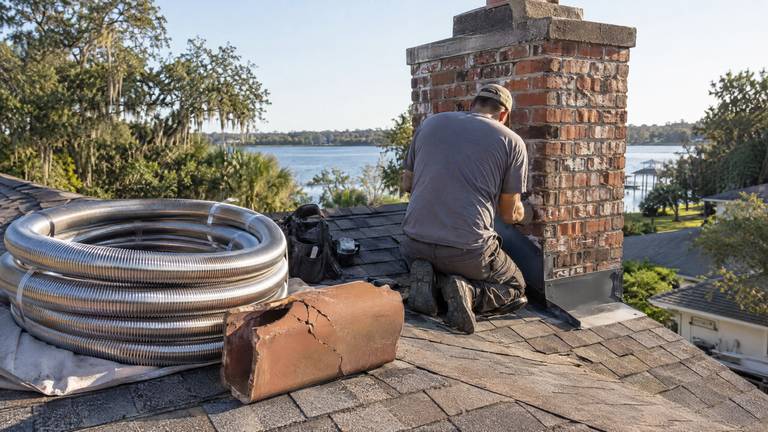
Identify the appliance before selecting the liner
The fuel, appliance model and intended use determine the requirements for the exhaust path. A liner suitable for one appliance is not automatically suitable for another. Before chimney relining, we establish what is connected now and whether you plan to change it. A future appliance replacement should not be assumed compatible with an unspecified existing liner.
Manufacturer instructions and applicable requirements guide sizing and installation. Choosing the smallest liner that can be pulled through a passage is not a design method. The route, height, connection and appliance requirements need to work together. We explain the proposed arrangement so you understand why that liner is being selected.
Assess the existing chimney around the passage
A new lining does not stabilize loose exterior masonry or correct a failed crown. The accessible chimney structure must be considered alongside the passage inside it. Deterioration, obstructions and restricted access can affect how the installation can be carried out and what other work is required.
The condition of an existing clay lining may also influence the options. Localized chimney flue repair is different from a complete new lining system. We distinguish repairing the existing material from replacing its function with a new liner. The recommendation should explain which approach is suitable for the condition found, rather than use the terms interchangeably.
Choose a listed system with compatible parts
Stainless steel chimney liner installation is one option for suitable applications, using a system intended for the appliance and fuel. Material alone does not define suitability. The liner, connectors, supports and termination must form the intended installation, with the manufacturer's requirements followed throughout.
Some appliances may permit different materials or arrangements, but that permission has to come from the actual application. A generic claim that every gas appliance accepts the same liner would be misleading. We identify the relevant equipment and proposed system before ordering components. This also helps avoid combining parts simply because their dimensions appear to match.
Include required insulation and clearance considerations
An insulated chimney liner may be necessary under the selected system's listing and the conditions of installation. Insulation is not a decorative extra, and omitting it cannot be justified solely because the passage is tight. The available space and required clearances must be resolved as part of the plan.
Where the existing construction cannot support the intended installation without changes, we explain those changes or discuss another suitable approach. Concealed conditions may limit what can be established during the first visit. Those limits should be clear before the project is presented as ready to install. The completed system must satisfy its requirements, not just pass physically through the stack.
Plan the lower connection and top termination
Chimney flue liner installation includes the relationship to the appliance below and the termination above. The lower connection needs to suit the equipment and remain appropriately accessible. The top needs the specified support and weather detail. Treating the liner as only a length of material leaves these important interfaces unexplained.
Before relining, identify inserts, difficult access behind the appliance and any proposed changes to the fireplace opening. Moving equipment may require its own planning and protection. At the roof, the crown or enclosure may need attention before the new termination can be installed correctly. We identify related work so a new liner is not left dependent on a deteriorated connection.
Understand what flue liner replacement changes
Chimney liner replacement renews a defined exhaust path. It does not automatically repair the firebox, roof flashing or an appliance fault. If another defect affects operation, that finding needs its own recommendation. We explain the boundaries of the project without treating a new liner as a cure for every draft or moisture complaint.
Gas inserts often use their own model-specific vent arrangement as part of gas fireplace insert installation. A wood-burning insert also needs to be considered with its appliance instructions. Tell us if the intended project includes a new insert so the venting and appliance work can be designed together rather than as unrelated purchases.
Prepare for relining without disturbing the appliance
Have the appliance model and any previous service information ready if available. Leave the system unused and cool for the visit, and mention access restrictions around the fireplace and chimney. You do not need to pull the appliance out or remove old lining material yourself.
The work plan should explain necessary access, preparation of the passage and protection for the room and roof. If installation requires material removal or another trade, that work is identified before it proceeds. A clear sequence matters especially when the chimney has offsets, damaged existing lining or a limited route for the selected system.
Review the installation before returning to use
At completion, we explain the installed system and the relevant operating or maintenance instructions. Keep its information with the appliance paperwork. Future work on the appliance or chimney should take account of that system, including any restrictions on component substitution or cleaning methods.
Arrange a free inspection with Seminole County Chimney at (645) 465-4122. Our family-owned team gives you the proposed liner work and price in writing before installation. New customers receive 10% off the first service, with no hidden fees in the agreed work. You can ask about the material, insulation and connections so the decision to reline the chimney is based on a complete installation plan.


