
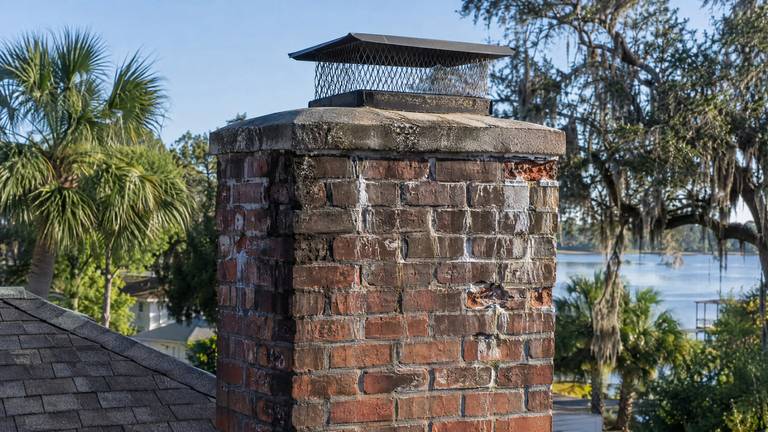
Chimney Repair
Inside a chimney leak repair
It starts with the leak inspection, and 10% comes off work booked within 72 hours of it.
Chase covers that hold water
A metal chase cover on a factory-built chimney should shed water off its edges. When it sags or was installed flat, water sits in the middle and rusts through the metal.
One manufacturer's instructions ask for a chase top that falls away from the pipe opening so water drains off. We replace rusted or flat covers with ones shaped to shed water, sized to the chase and fitted with a collar. The replacement is measured on site, so the new cover fits the chase rather than a standard size.
Separating chimney work from roof work
Water that shows near a chimney does not always come from it. Roofing beside the chimney, a skylight, a vent or a gutter above can send water to the same ceiling.
Our inspection of the chimney and its flashing tells you plainly when the evidence points to a roof defect instead. That way the chimney repair covers the chimney, the roofer handles the roof and you are not asked to pay for work that would not stop the water.
Sloped shoulders on the chimney
Where a brick chimney steps in, its sloped shoulders catch rain on each step. The Brick Industry Association recommends a setting bed and solid brick or pavers for these racked areas, with each step finished to shed water.
Open joints or cracked washes on the shoulders let water into the chimney below the roof line, where it is easy to miss. We inspect and repair these areas as part of the leak work when they show damage, and they are listed on their own line.
Roof water aimed at the chimney
A roof valley, an upper roof or a gutter can send concentrated water against the side of a chimney. That flow can overwhelm flashing that would handle ordinary rain.
Where the water on the roof comes from matters as much as where it goes in. When runoff is part of the cause, we explain the chimney side of the fix and name any roofing or gutter change that would reduce the flow.


