
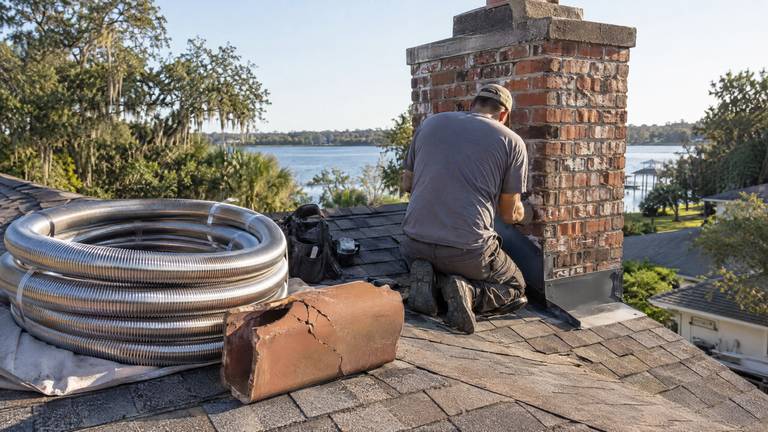
Understand the lining defect
Cracks, missing material and open joints can affect a clay-tile flue differently. The location and extent of the damage matter, as does access to the affected section. A tile visible near the top may be easier to reach than one deep inside the stack. We distinguish what has been observed from concealed areas that still need assessment.
Flue tile repair should not be selected from the appearance of one fragment alone. If broken material has reached the firebox, leave the fireplace unused and preserve the information about where it was found. Do not reach into the passage or light a fire to see whether smoke still rises.
Consider a localized tile repair where it is practical
Chimney flue tile replacement can be appropriate for a reachable damaged section when the remaining lining and structure are suitable. The replacement needs the correct connection to retained material and must preserve the intended passage.
Repairing the topmost tile does not establish that every tile below it is sound.
For cracked flue tile repair, we explain why a limited repair is being recommended or why it would leave too much unresolved. The proposal should identify the actual area involved. A convenient access point is not a reason to ignore defects farther along the exhaust route.
Evaluate resurfacing as a specific repair system
Chimney flue resurfacing is not ordinary mortar spread over any damaged surface. An appropriate system has its own instructions, limitations and preparation requirements. The existing flue condition and the intended appliance must support that use before resurfacing can be recommended.
We explain the proposed material and what it can address.
A coating should not be presented as a way to stabilize a structurally unsound chimney or conceal extensive missing material. If the necessary preparation or assessment cannot be completed, another approach may be required.
Know when a new liner belongs in the plan
Chimney liner repair and full liner installation are related but different scopes. Widespread damage, unsuitable dimensions or a change in appliance may make relining more appropriate than a series of local patches. The new liner must be selected for the fuel, appliance and existing chimney conditions.
Our chimney liner installation service covers that broader work. It does not automatically repair a loose exterior stack or an unstable support. When both structural and lining work are necessary, the order and relationship are explained before the project proceeds.
A change in appliance should always be mentioned during the inspection. A repair that suits the current use may not resolve the requirements of a different appliance you plan to install later.
Prepare for assessment and understand the outcome
Previous chimney fires, falling fragments and earlier lining work are important details to share, along with the connected appliance. Keep any existing service records available. These details help direct the assessment without replacing inspection of the current condition.
Request a free inspection of the flue concern at (645) 465-4122. We explain the flue repair findings, the price of proposed work and any additional access needed. At completion, follow the specific instructions about curing and use. A clean-looking opening does not itself confirm that a repaired flue is ready to carry exhaust safely.
