
Chimney Services
Our chimney cap specialists at work in Elder Springs
Our experts check the flue, the tile and the crown before a new cap is ordered for your Elder Springs home.
A cap that comes off for sweeping
A cap should never turn the chimney into something that cannot be cleaned. The Florida Building Code requires a spark arrestor to have access for cleaning, with the screen or cap removable so the flue can be swept. Caps that are welded or glued shut work against that.
We fit caps with lids or screens that come off with ordinary tools, and we show you where the fasteners are. When your flue is swept later, the sweep can open the top, clean through it and refit the cap without cutting anything.
Fasten the cap for storm season
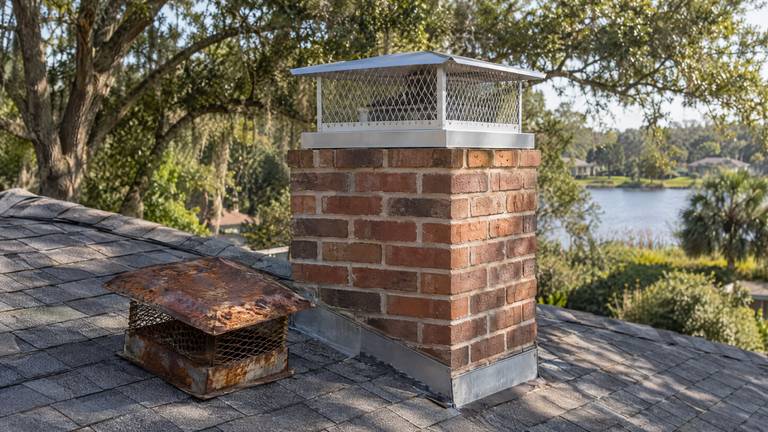
Hurricane season in the Atlantic lasts from June 1 through November 30, and wind from a passing storm pulls hardest at the edges of a cap lid. Loose bolts, cracked adhesive and screws set in soft mortar are what let a cap lift off.
We tighten and test every fastener, check the lid brackets and look for movement before we leave the roof. If you have an older cap you are unsure about, ask us to look at it at the start of the season instead of after the first storm.
An unused fireplace still needs a cap
A fireplace nobody lights can still take in rain and animals. Water that runs down an open flue rusts the damper, stains the firebox and soaks the smoke chamber, however long it has been since the last fire.
Capping an idle chimney is one of the simplest ways to keep it from deteriorating. If you plan to use the fireplace again one day, we fit a cap that can be removed for sweeping and inspection when that day comes.
Rattling or whistling from the cap on windy days
A cap that rattles in the wind is telling you something has loosened. The lid bracket may have bent, a bolt may have backed out or the cap may be shifting on the tile. A high whistle can come from damaged mesh or a lid that has dropped out of line.
Noise is worth checking before a storm finishes the job. We find the loose part, tighten or replace it and show you what moved, so you know whether the cap has more life in it or needs replacing.


