Describe what you have noticed without approaching it
Tell us whether you hear movement, have seen an animal or have found material below the flue. The time and location of the activity can help guide the initial assessment. Do not reach into the chimney or try to handle unfamiliar wildlife. Keep people and pets away from an animal that has entered the room.
A request for animal removal from a chimney can involve a bird, mammal or an empty obstruction. Those are not interchangeable jobs. Whether there is a raccoon or squirrel in the chimney or a nesting bird, the animal and its location need to be identified before a method is chosen.
Respect protected birds and occupied nests
Chimney swifts are protected migratory birds, and an occupied nest cannot simply be treated as debris during a cleaning. Bird nest in chimney removal must follow the applicable wildlife rules. If young chimney swifts fall, the U.S. Fish and Wildlife Service advises contacting a authorized migratory bird rehabilitator.
Bird removal from chimney spaces may therefore involve specialist guidance or waiting until lawful work can proceed. Do not light a fire to drive birds out. Smoke and heat can harm wildlife and do not provide an appropriate removal method. Closing the top while birds remain inside is also not a solution.
Check bat restrictions before exclusion
Bat in chimney removal requires attention to Florida's protection and exclusion rules. Identification and timing matter, particularly when young bats may be unable to leave. We do not promise immediate exclusion before those conditions have been established.
If direct contact with a bat has occurred or exposure is uncertain, contact the appropriate health or wildlife authority for guidance. Do not attempt handling as part of preparing for the chimney visit. The chimney repair conversation is separate from assessing a possible human or pet exposure.
Separate removal from cleaning and repair
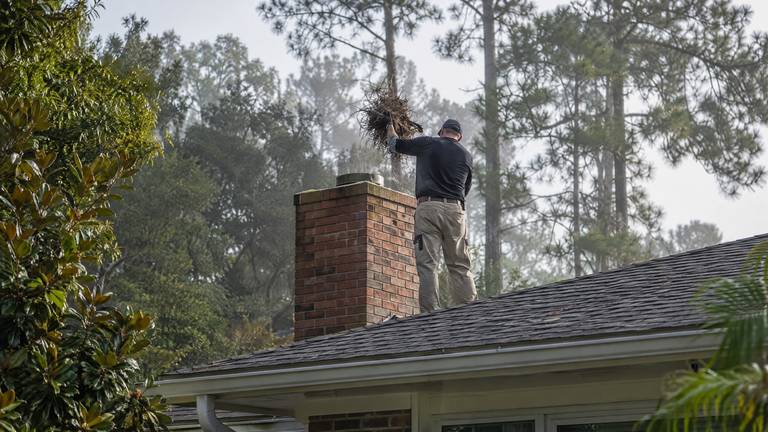
After animals in chimney spaces have been addressed lawfully, nesting material or other debris may still restrict the passage. Cleaning can then be planned around the condition found. Damage to a cap, lining or other component needs its own repair; removing an animal does not establish that the fireplace is ready for use.
We explain what was accessible and whether another assessment is needed before operation. An apparently quiet chimney is not proof that every animal has left or that the passage is clear. Do not use the fireplace as a test while the situation remains unresolved.
Close the entry only after the chimney is clear
A suitable screened cap can help protect an appropriate chimney opening after the wildlife concern is resolved. The cap must suit the chimney system and remain compatible with its exhaust requirements. A makeshift screen should not obstruct the passage or trap remaining wildlife.
Describe the wildlife activity when requesting your free inspection at (645) 465-4122, including whether an animal has entered the room. We explain the available chimney work and any specialist referral or timing restriction. If cleaning and chimney cap replacement are recommended afterward, those services are priced separately and carried out in the appropriate order.
