
Chimney Services
Chimney cap replacement done properly in Sanford
Our experts check the flue, the tile and the crown before a new cap is ordered for your Sanford home.
Crown-mounted caps for several flues
Where two or more flues rise close together, one cap can cover them all. This kind of cap is fastened to the crown with a flange, adhesive and masonry screws, and the maker's guidance keeps each flange edge at least one inch from the edge of the crown so the fasteners do not crack it.
A crown-mounted cap depends on a crown that is sound and flat enough to seat the flange. We check the surface, the tile heights and the spacing between flues before recommending one. When the crown is failing, the cap waits until the crown is repaired.
Lid height and a steady draft
A cap changes how exhaust leaves the chimney. The Brick Industry Association notes that the effect of a manufactured rain cap on the flow through a chimney should come from its maker. That is why lid height and style come from the product data and are never set by eye.
If your fireplace already drafts poorly, a new cap is not assumed to fix it. We look at the flue size, the chimney height and the fireplace opening, then tell you what a cap can change and what it cannot.
A cap with a top-sealing damper
Some caps are combined with a damper that seals the top of the flue. A cable runs down to the fireplace, and pulling it opens or closes the lid. When it is closed, rain, animals and outside air stay out of the chimney.
A top-sealing damper suits some chimneys better than others, and it has to be fully open whenever the fireplace is in use. We explain whether your flue can take one and how it compares with a standard cap before you decide.
When a home inspection flags the cap
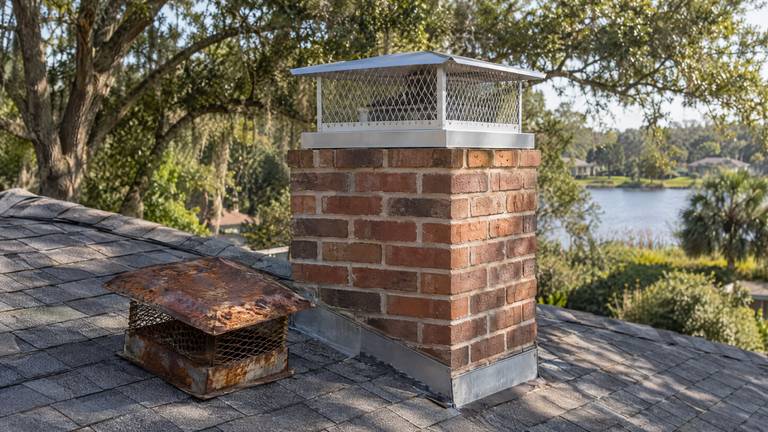
A missing, rusted or loose cap is a frequent note on a home inspection report, often alongside comments about the crown or the flashing. Buyers and sellers usually want the item closed out quickly, with something in writing to show it was done.
Our visit covers the chimney top, confirms what the report describes and ends with a written price for the fix. After the work, you get a written description of what was installed, which you can pass along to the other side of the sale.


