
Fireplace Services
Inside a new fireplace installation
A workmanship warranty, a clean site every evening and a price with nothing tucked away.
Framing the fireplace opening
The fireplace manual gives the framed opening and the finished cavity depth for each model. One maker asks for the framing across the top to sit above the fireplace's top standoffs, so the header never rests on the unit.
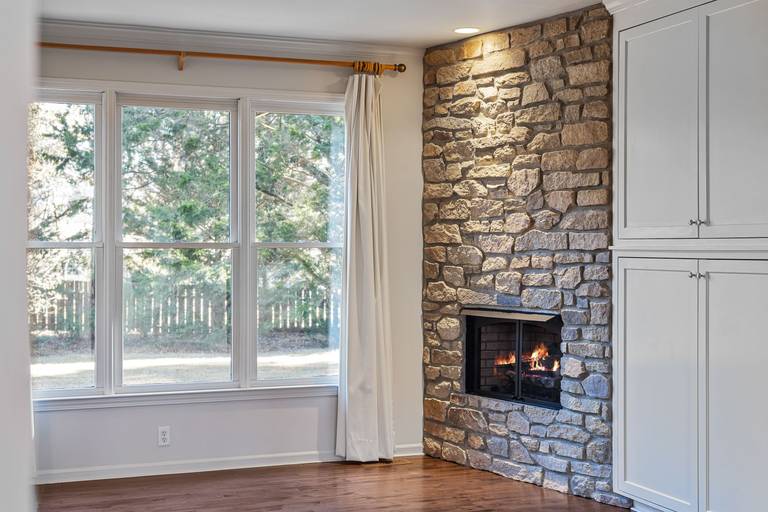
Our installers frame the opening to the manual, check it for square and set the fireplace before the finish is planned. Getting the opening right is the step that makes every later step easier. We confirm the opening against the unit that actually arrives, before any stone, tile or trim is ordered for the face.
The roof opening for the chimney
The chimney has to pass through the roof somewhere, and one chimney maker advises against modifying roof beams to make room for it. The route is chosen to fall between structural members where possible.
We lay out the roof opening from inside the attic before cutting and coordinate the roofing work with your roofer or ours. The roof side of the job is listed in the estimate with who does it and in what order. The roof opening is covered at the end of each work day until the chimney and its roof parts are in place.
Hearth extension rules for factory-built units
A factory-built fireplace uses the hearth extension its listing calls for, and the Florida Building Code asks for that extension to be readily distinguishable from the surrounding floor. Listed hearth extensions are tested to UL 1618.
We plan the hearth with the flooring so the extension is the right size and material and clearly marked off from the floor. One maker also uses metal hearth strips at the front of the unit, which we fit as the manual shows. If new flooring is planned, we set the extension height with your flooring installer so the two meet cleanly.
What the new fireplace burns
A wood-burning fireplace is built for solid wood fuel. One maker forbids gasoline, kerosene and lighter fluid and warns against chimney cleaners and flame colorants, and one chimney maker adds driftwood, plastic and chemically treated wood to the list.
The fuel rules are covered at handover. Clean, dry firewood and a proper starter are all the fireplace needs. Wrapping paper, cardboard boxes and scrap lumber are the usual temptations, and all three stay out of the firebox. We also explain how to lay a fire so it catches without help from a liquid.


