
Our Process
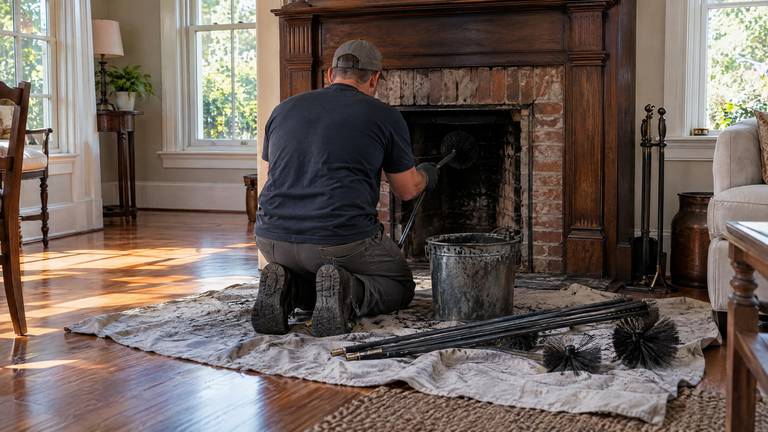
Removing hardened creosote from a chimney in Sanford
A poultice that dissolves glazed creosote
One removal system, SaverSystems' Poultice Creosote Remover, is made to remove third-degree glazed creosote from clay flue tiles or stainless steel liners. According to its data sheet, it dissolves and absorbs the creosote, and as it dries it loses its grip and falls from the flue walls.
Whatever remains is then removed by normal sweeping. The product is mixed to a thick, pudding-like consistency and applied to the flue, which is how it reaches glaze that a brush cannot shift. We explain the product and its steps before any work starts in your Sanford home.
Powder modifiers for glaze in a working flue
A different approach uses a powder modifier. SaverSystems' Cre-Away data sheet describes a four-component powder that turns glazed creosote into a more brittle form, which loses its adhesion through heating and cooling so it can be swept out more easily.
The data sheet says to apply it directly into the chimney and not in the fire, then burn a fire to trigger its catalyst, repeating with each new fire for about a week before the chimney is cleaned. Because it relies on continued fires, we suggest it only where an inspection has found the flue sound enough to use.
A fire starved of air
A restricted air supply is another cause EPA names: appliance doors kept closed, a damper not open wide enough, or air flow too weak to move heated smoke quickly up the chimney. DuraVent's liner instructions make a similar point, noting that wood burned slowly produces tar and other organic vapors that combine with moisture to form creosote.
A fire kept low and smoky for hours is the pattern both describe. We look at the damper, the air controls and how the fireplace or stove is used in your Sanford home, and suggest changes that give the smoke a quicker path out.
Cool flue walls and condensation
A chimney that is cooler than normal is the third condition EPA lists, because smoke condenses more readily on cool flue walls. Slow fires that never bring the flue up to temperature leave more of their smoke behind on the way out.
When we find glaze, we look at how the fireplace is typically used and whether the flue and the appliance suit each other, and we explain what we see in plain terms. Sometimes the fix is a habit, sometimes it is a change to the flue, and the estimate says which.


