
Our Services
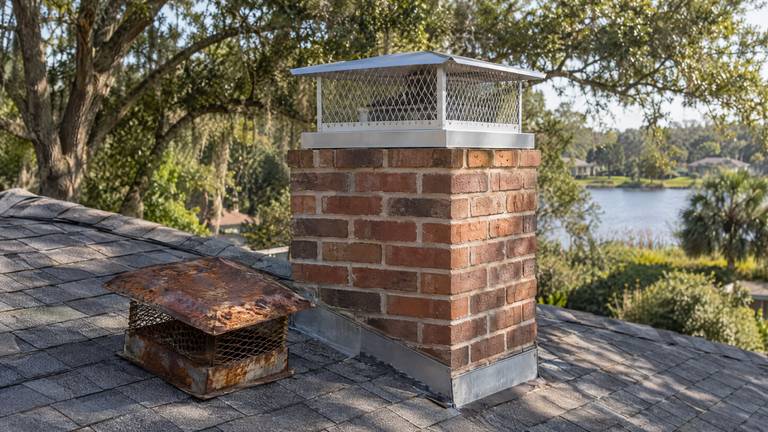
Chimney caps measured, fitted and checked
Local pros, upfront written prices and a 10% discount on work confirmed inside 72 hours of the inspection.
Factory-built chimneys keep their listed cap
A metal factory-built chimney is sold and tested as a system, and its termination cap is one of the parts. The Florida Building Code requires factory-built chimneys to be listed, labeled, installed and terminated to the maker's instructions. A universal cap fastened over the pipe is a different part.
We read the label or the manual, identify the system and replace the cap with the part made for it. If the original maker's part is no longer sold, we explain the listed options before ordering anything for your chimney.
When the flue tile sits too low
A bolt-on cap has to grip tile that stands clear of the crown. Brick Industry Association guidance puts the top of the flue liner a minimum of two inches above the crown surface, and some chimneys were finished with far less showing.
Where the tile barely clears the crown, a crown-mounted cap or a repair to the top of the chimney may be the better route. We measure the projection at the inspection and explain which approach fits your chimney before any part is ordered.
Leaves and nests in an open flue
An uncapped flue collects leaves, twigs, seed pods and nesting material, and much of it lands on the smoke shelf where it cannot be seen from the fireplace. Dry debris close to a fire is a hazard, and wet debris holds moisture against the masonry.
Before we fit a new cap, we look down the flue for blockage. If the flue needs sweeping, we tell you and price it, so the cap does not end up closing debris inside the chimney.
A cap with a top-sealing damper
Some caps are combined with a damper that seals the top of the flue. A cable runs down to the fireplace, and pulling it opens or closes the lid. When it is closed, rain, animals and outside air stay out of the chimney.
A top-sealing damper suits some chimneys better than others, and it has to be fully open whenever the fireplace is in use. We explain whether your flue can take one and how it compares with a standard cap before you decide.


