
Our Services
How our technicians find a gas fireplace fault
Every repair ends with a test run, a leak check on opened connections and a written record of the work.
Repair visit or scheduled service
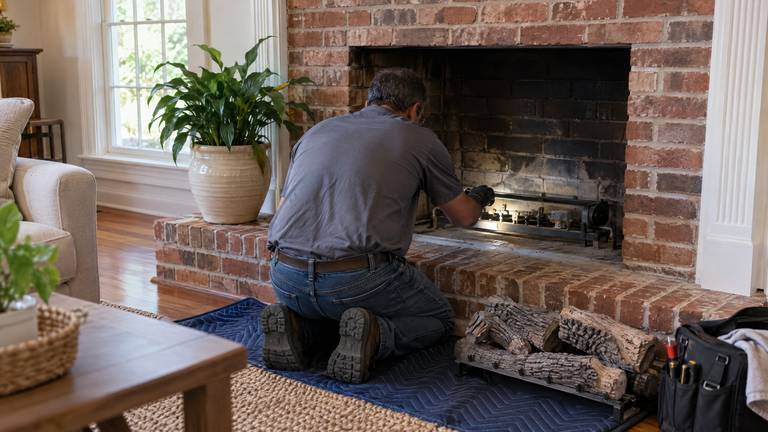
A gas fireplace visit usually starts from one of two places. Either the unit has stopped working properly, because it will not light, will not stay lit or burns in a way it did not before, or it still works and is due for the routine cleaning and checks its maker calls for. The first is a diagnosis. The second follows a service list.
Both kinds of visit touch many of the same parts, so it helps to tell us which one you need when you call. For a fault, describe what the fireplace does and when it started. For a service visit, tell us roughly when it was last looked at. Either way, the first look is free and the price for the work comes before the work.
Where the vent ends outside the house
A direct-vent fireplace takes its combustion air in from outdoors and sends exhaust out through that same termination, which is usually a cap on an exterior wall or on the roof. Leaves, nesting material, overgrown plants or a cap knocked out of place can upset that balance and change the flame.
During service we check the termination and the parts of the vent we can see and reach, look for damage and blockage and confirm the flame behaves normally with the vent clear. Faults in the vent run itself, such as separated joints or a route that needs changing, are handled as gas fireplace venting work and priced on their own.
Propane fireplaces need propane parts
A fireplace built for propane uses a different orifice, different valve settings and different pressures from a natural gas model. The rating plate says which fuel the unit was made for. Changing fuel is done only with the conversion parts the manufacturer lists for that model, and some units cannot be converted at all.
The tank, the regulator and the supply line belong to the propane supplier. On one maker's vent-free models, a tank running low changes the flame and can cause soot, so we ask about the tank level when a propane unit starts misbehaving. If the fault is in the supply, we tell you and leave that part to the supplier.
When a repair stops making sense
Many gas fireplace faults come down to a cleaning, an adjustment or one part. Sometimes the picture is different. A discontinued valve with no approved replacement, a firebox that has burned through or several failing parts at once can make repair a poor use of money. Age alone is no reason to replace a fireplace that can still be repaired with listed parts.
When that happens we say so, show you what we found and explain both routes, repairing what can be repaired or replacing the unit. The decision is yours, the inspection that led to it is free, and nothing is ordered until you approve a written price.


