
Chimney Repair
Finding and fixing the leak at its source
It starts with the leak inspection, and 10% comes off work booked within 72 hours of it.
Crown cracks and their repair
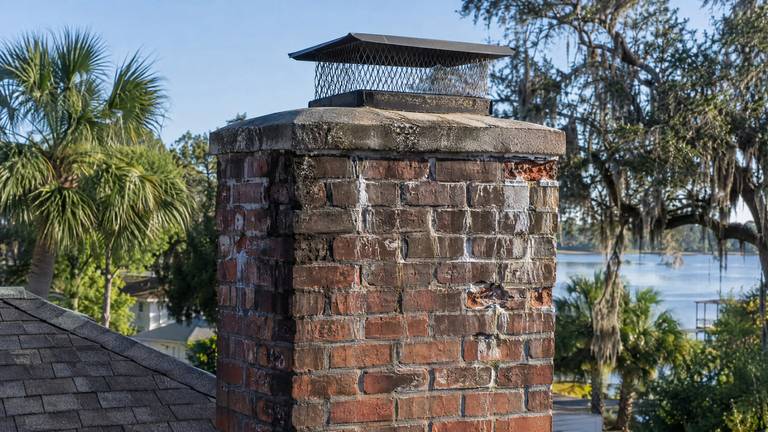
The crown should slope water away from the flue and past the edge of the brick. Hairline cracks in an otherwise sound crown can be sealed with a crown coating made for the purpose, applied to the maker's instructions.
A crown that is broken through, crumbling or flat enough to hold water needs rebuilding. The new crown is formed to slope, with a drip edge that throws water clear of the chimney faces, as the Florida Building Code describes. We explain which repair the crack pattern supports and price it before any work begins.
White deposits as a moisture clue
White powder on the chimney faces or inside the firebox is mineral material carried to the surface by water moving through the masonry. It shows where moisture has traveled and dried.
Light deposits can be removed by dry brushing, and harsh acids are avoided because they can damage brick. The deposits themselves are a clue rather than the problem, so we use their location to help trace where water is entering. Once the leak is stopped, new deposits should slow and then stop appearing.
Flashing on tile roofs
Tile roofs of concrete or clay need flashing and counterflashing shaped to the tile, following the roof maker's details and the building code. The metal has to carry water over and around the tile profile.
When the flashing on a tile roof fails, water can run under several courses before it appears inside. We plan the flashing repair around the tile so pieces are lifted and reset with care, and we note any cracked tiles that need replacing so the roof around the chimney is left sound.
A drip edge that throws rain clear
When a crown stops flush with the chimney face, water runs straight down the brick. A crown that overhangs with a drip edge breaks that flow and drops the water clear of the wall.
When we rebuild a crown, the overhang and drip edge are formed as part of the new work. On an existing crown with no overhang, we explain whether a rebuild or another detail would reduce the water reaching the faces, and what each option would change.


