
Our Services
Chimney rebuilding explained for Lake Monroe
Questions every homeowner in Lake Monroe should have answered before a chimney rebuild.
Finding where sound masonry begins
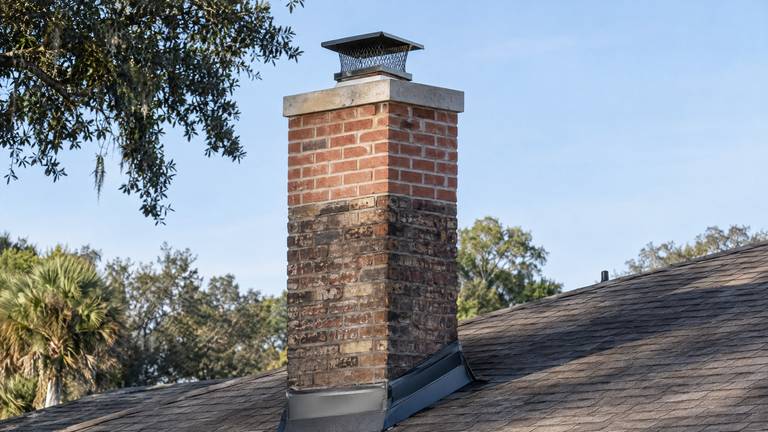
A rebuild starts by deciding how far down the chimney has to come. Our masons take courses off from the top and check each one as it comes away, looking for mortar that still grips and brick that is still solid. The new work begins on the first course that is firmly bedded and square.
That point is often at or just below the roofline, but it depends entirely on the chimney. Stopping too high leaves weak masonry under new brick, and taking down more than needed adds cost for nothing. Your estimate names the expected stopping point and explains what would change it once the old brick is off.
If the brick at the planned stopping point turns out weaker than expected, we stop, show you the course in question and agree the new stopping point and price with you before continuing.
Stepped-out brick and corbel limits
Many chimneys step outward where they change size, a detail called corbeling. The Florida Building Code, Residential, sets limits on it. Corbeling from a wall or foundation may not exceed half the chimney wall's thickness, and a wall thinner than 12 inches can carry a corbeled chimney only when the chimney projects equally on both sides.
When a rebuild reaches a corbeled section, the new courses have to follow those limits even if the old work did not. We check the existing steps before planning the rebuild and explain any change to the chimney's shape that the code requires, before any brick is ordered.
Corbeled steps are also places where water sits on the top of each ledge, so we check those ledges for washed-out mortar and plan a properly shaped wash or tooled joint on each one.
Permits and inspections for a rebuild
A chimney rebuild is structural work, and it may need a building permit and inspections depending on the scope and where you live. The local building department decides what applies to your project.
We tell you what we expect the job to require when we write the estimate, and we build the time for any permit and inspection steps into the schedule. If the rules for your address call for drawings or an engineer's letter, we explain that before work is booked, so the start date you plan around is a real one.
Where a permit applies, we plan the stages of the work so any required inspection can happen at the right point without leaving the chimney open longer than necessary.


