
Chimney Services
Liner installation details for Indian Mound Village homes
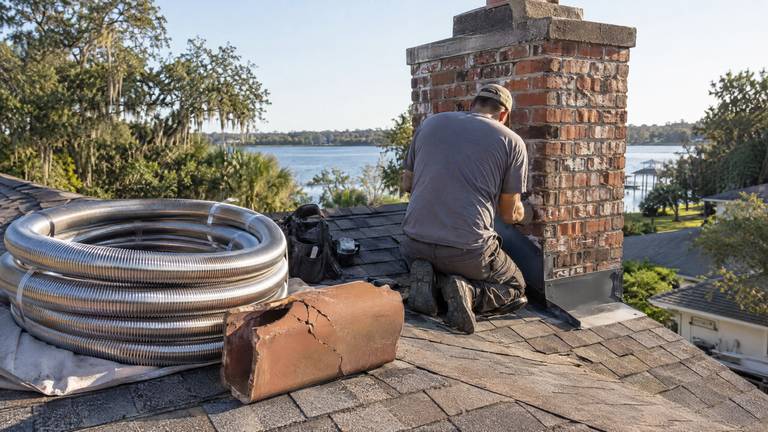
The route, the insulation and both connections are settled before a liner is ordered.
The appliance decides the liner
The fuel, the appliance model and the way it connects set the requirements for the liner. A liner that suits one appliance is not automatically suitable for another, even when both would fit the same chimney.
Before recommending a liner, we identify the appliance in use and any appliance you plan to install. If a change is coming, the liner is chosen for the new appliance, so you are not paying to reline twice. The appliance's installation manual is where those requirements are written, so we work from it rather than from rules of thumb.
Cleaning before the liner goes in
One manufacturer asks for the chimney and smoke chamber to be swept clean of soot and creosote, glazed deposits included, before its liner is installed. Deposits left behind the new liner can still smoke or smell.
We clean the passage as part of the relining work, or ahead of it when the deposits are heavy. The cleaning is priced in the estimate, and anything the cleaning reveals about the old lining is explained before installation continues. Cleaning also lets the route test run through a clear passage, which gives a truer answer about whether the chosen liner will pass.
Reshaping a liner for a narrow flue
Flexible liners can be shaped into an oval to fit a narrow rectangular flue. Reshaping changes the cross-sectional area, as one liner maker points out, so an ovalized liner must still carry enough area for the appliance.
We recommend ovalizing only when the resulting area still meets the appliance's needs and the listing allows it. The size before and after shaping is explained, so the decision rests on the measurements rather than on what happens to fit. The listing and the appliance instructions both have to allow the reshaped liner, not only the space available.
When a liner is not the answer
Relining restores a passage inside a sound chimney. It does not repair a leaning stack, a failed crown or loose exterior brick, and it is a different job from repairing the existing clay lining in place.
When the structure needs rebuilding or the existing lining only needs a local repair, we say so and explain that option instead. You get the recommendation that suits the chimney, not the one that sells the largest job. When more than one approach could work, each is priced separately so you can compare them.


