
Our Services
What our chimney inspection covers in Indian Mound Village
Here is what our chimney professionals look at during a free inspection in Indian Mound Village.
When a closer examination is called for
NFPA 211 asks for a more thorough examination at certain moments. These include the sale or transfer of a property, a change to the appliance connected to the chimney, plans to reline the flue and damage from a storm or another event.
In those situations the accessible parts of the chimney deserve more attention than a routine look through the opening. We tell you in advance what the visit will reach, including attic or crawl space areas that can be entered without removing permanent parts. If a concealed section matters to the decision in front of you, we explain what it would take to see it.
Flashing where the chimney meets the roof
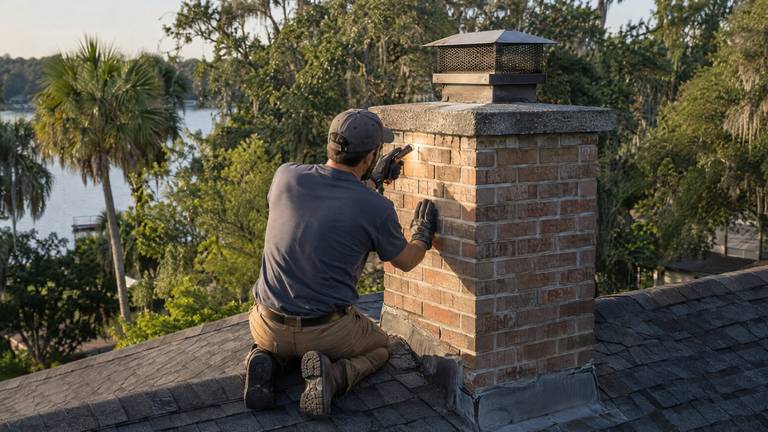
The joint between the chimney and the roof is a frequent path for water. We check the base flashing along the roof, the counterflashing set into the masonry above it and the sealant at each edge.
Loose laps, rusted metal and sealant used in place of proper flashing all appear as findings. We also look at the uphill side of the chimney, where leaves and water collect. Where the roof side of the joint is the problem rather than the chimney side, we say so plainly, so the right trade handles the right part and you do not pay twice for the same leak.
The smoke chamber above the damper
Between the damper and the flue sits the smoke chamber, a sloped space that guides smoke into the lining. Rough or stepped walls, open joints and heavy deposits here affect both the draft and the safety of the fireplace.
We inspect the chamber from the fireplace opening with the damper open and a strong light. Corbeled brick left exposed, cracks through the parging and gaps where the chamber meets the flue are each noted. If the surface needs parging or cleaning, we explain why and include the work in a written estimate, separate from the free inspection.
Soot and creosote inside the flue
Burning wood leaves soot and creosote on the flue walls. Loose soot brushes out readily, while a hard, glazed layer needs different methods and more time to remove.
We note the type and amount of deposit we see, where it sits in the system and whether a sweep is advisable before the next fire. Heavy deposits can also hide the lining underneath, so the findings say when a clear view of the tile will only be possible after cleaning. A recommended cleaning is priced separately from the inspection, which stays free.


