
Chimney Repair
Stopping water at the chimney
A free inspection comes first, and the repair is priced in writing before any work begins.
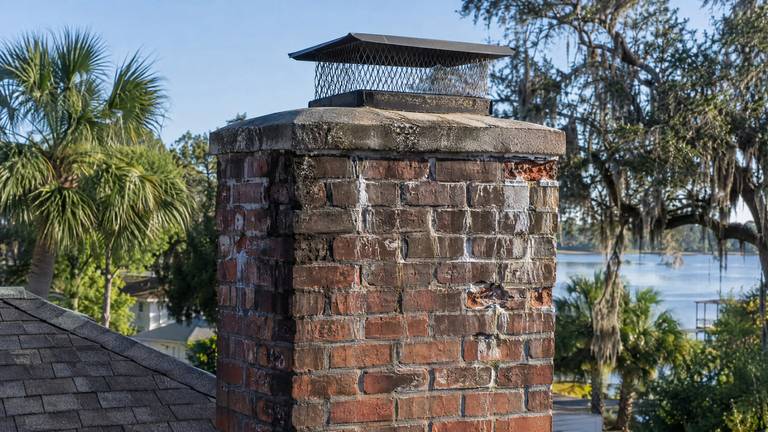
Brick faces that have flaked away
Brick that stays wet can lose its hard outer face. Once that face is gone, the softer core absorbs even more water and breaks down faster.
We cut out badly damaged units and replace them with brick matched as closely as we can in size and color. Repair comes before any water repellent, since a treatment cannot restore missing material. The estimate lists the number of faces affected and the work planned for each, so the scope is clear before we begin.
The storm collar around the pipe
On a metal chimney, the pipe rises through a hole in the chase cover, and a storm collar clamped around the pipe above that hole throws rain outward. If it slips or its seal fails, water runs down the outside of the pipe into the chase.
Chimney makers' instructions describe how the collar is fitted and sealed against the pipe. We reset or replace the collar to those instructions without sealing the openings the system needs for ventilation. It is a small part, and it is often the whole answer to a leak on a metal chimney.
Rain or condensation
Burning a fuel produces water vapor along with other gases. In a flue that is too large or too cold for the appliance it serves, the vapor can condense on the cold flue walls and trickle down inside the chimney.
The timing tells the two apart. Rain leaks follow storms, while condensation follows use of the appliance, sometimes on dry days. If the evidence points to condensation, sealing the outside of the chimney will not help, and a correctly sized liner becomes part of the conversation.
Why a closed damper does not stop a leak
Closing the damper keeps water from reaching the room directly, but the water is still entering the chimney above it. It collects on the damper plate and the smoke shelf, where it rusts metal and softens mortar out of sight.
A closed damper can also hide how bad a leak has become. We open it during the inspection to see what has collected there, and the repair is aimed at the entry above rather than at keeping the water contained below.


