
Chimney Services
Chimney cap replacement done properly in Goldsboro
Chimney cap replacement from local pros who measure first and fasten every cap by hand.
What a chimney cap is there to do
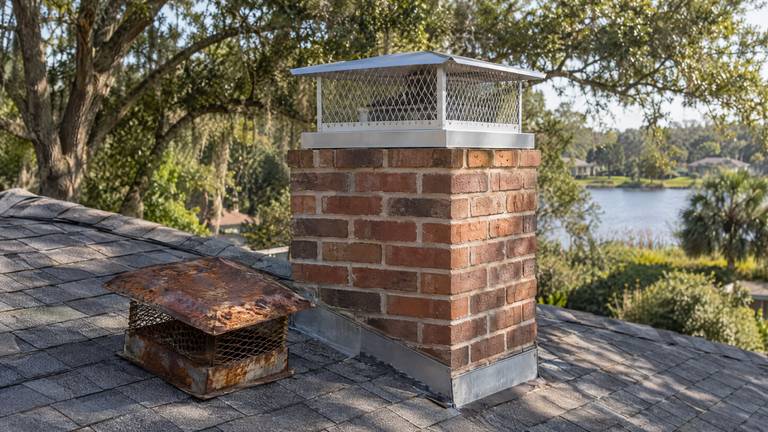
A chimney cap sits on top of the flue and does several jobs at once. Its lid turns rain away from the opening, its sides keep leaves and nesting material out, and its screen stops animals from climbing in. On a wood-burning fireplace, the same screen can catch embers before they reach the roof.
None of those jobs should block the exhaust. A cap that restricts the opening can slow the draft and send smoke back toward the fireplace. We choose each cap with both halves in mind, what it keeps out and what it has to let through.
Spark arrestor mesh that meets the code
Arrestor screens on masonry chimneys are spelled out in the Florida Building Code. Mesh openings have to be small enough to catch a half-inch sphere yet large enough to pass a three-eighths-inch one, and the screen material has to match the heat and corrosion resistance of 19-gage galvanized or 24-gage stainless steel.
NFPA 211, the national standard for chimneys and fireplaces, also addresses spark arrestors. We fit screens that meet the code in place of the finest mesh on the shelf, since mesh that is too fine clogs with soot and restricts the flue.
Lid height and a steady draft
A cap changes how exhaust leaves the chimney. The Brick Industry Association notes that the effect of a manufactured rain cap on the flow through a chimney should come from its maker. That is why lid height and style come from the product data and are never set by eye.
If your fireplace already drafts poorly, a new cap is not assumed to fix it. We look at the flue size, the chimney height and the fireplace opening, then tell you what a cap can change and what it cannot.
After a cap comes down
When a cap falls in a storm, it can land in the yard, in a gutter or on the roof itself, and its edges are often sharp. Keep children and pets away from it and do not climb up to refit it. A ladder on a wet roof after a storm is a real risk.
Tell us where the cap landed and whether water has come into the fireplace since. We check the flue for debris that fell in, look at what the old cap was fastened to and fit a replacement that suits the chimney.


