
Our Services
Hearths measured, repaired and finished
Written quotes from local hearth pros, and 10% off a repair booked within 72 hours of the free inspection.
What holds the hearth up
A masonry hearth extension needs support that will not burn and will not sag. The Florida residential code wants noncombustible supports under it and enough reinforcement for its own weight and any imposed loads. Brick industry guidance describes a reinforced slab where the hearth cantilevers from the fireplace wall to the floor framing, or a base filled solid with masonry.
When cracks or movement suggest the support has changed, we look at how the hearth is carried wherever the structure can be seen. If the base needs work, that becomes the first line of the repair, ahead of any finish. Finding the support problem first is what keeps the new finish from cracking along the old lines.
How thick the hearth extension has to be
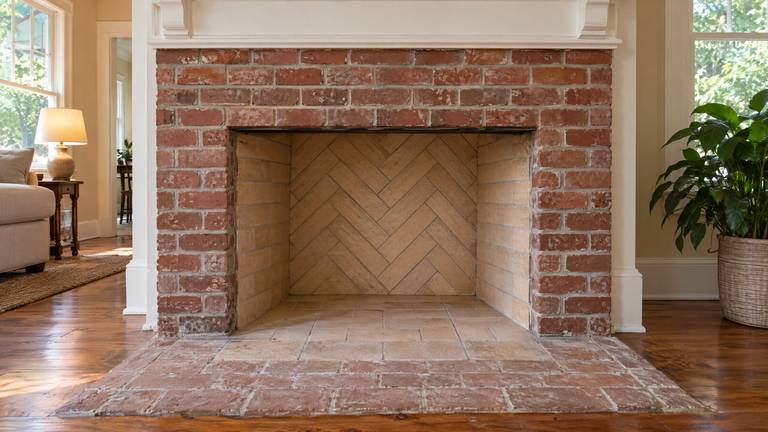
On a masonry fireplace, the Florida residential code sets a minimum hearth extension thickness of 2 inches. There is one exception. Where the bottom of the firebox opening is raised at least 8 inches above the top of the extension, the extension may be as thin as 3/8 inch, in brick, concrete, stone, tile or another approved noncombustible material. The figures apply to masonry fireplaces, and factory-built units follow their own listing.
Thickness matters when a hearth is ground down, cut back or replaced with a thinner finish. We measure the build-up during the inspection, and when the existing hearth relies on the exception, we keep the new finish within it.
Trim and mantel around the opening
Hearth repairs often lead to a look at the trim around the fireplace. For masonry fireplaces, exposed combustible mantels and trim must sit 6 inches or more from the opening under the code, and within 12 inches of it, anything combustible may project only 1/8 inch for every inch of distance.
If new trim, a mantel or a surround is part of your plans, we measure against those figures before anything is fitted. Wood trim that has crept too close during an earlier remodel is noted in the inspection so you can decide how to deal with it. A mantel shelf higher up the wall is measured too, since its projection is limited by how far it sits above the opening.
Cracked stone or slab hearths
A single stone slab often cracks right across when the support under it is uneven or something heavy lands on it. Whether the slab can be kept depends on whether both pieces are still fully supported and level with each other. Natural stone also varies from slab to slab, so a replacement piece may carry different veining or color from the original.
Where the slab is sound and supported, a filled and color-matched repair can close the crack. Where it has dropped, rocks or has lost support, we lift it, correct the base and either reset it or replace it. We explain which applies and how the finished repair will look before work starts.


