
Our Process
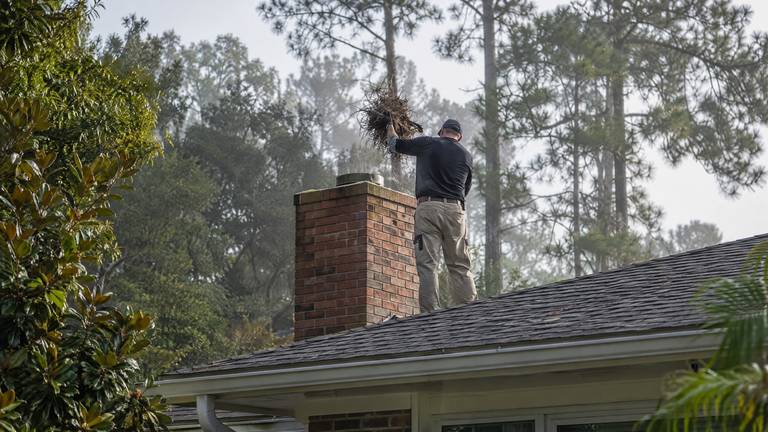
How chimney animal removal works in Goldsboro
Planning chimney work around the swift season
Swifts spend only part of the year here, and the U.S. Fish and Wildlife Service puts their arrival in March or April and their departure in August or September. The agency advises cleaning chimneys outside the nesting and roosting season, which for most of the country means between September or October and March or April.
If you hear swifts now, the practical answer is to wait. We book the cleaning and any capping in Goldsboro after the birds have gone, and our specialists explain what can be done safely in the meantime.
A cap that still allows cleaning
The same code section requires the spark arrestor to be placed with access for cleaning, and the screen or chimney cap to be removable so the flue can be cleaned. A screen fixed permanently over the flue with no way off is a problem at the next sweep.
The caps we fit in Goldsboro come off for cleaning without cutting or damage. When we hand over the job, we show you how the cap is attached, so any future sweep or inspection starts without a struggle at the top.
Other birds on or in the chimney
Swifts are not the only birds that use chimneys. Nests appear in the gaps of damaged caps, on crowns and inside open flues. The Migratory Bird Treaty Act prohibits taking protected migratory birds without authorization, and that protection covers many native species.
So we identify the bird before the nest is touched. If it is protected and active, the chimney work on your Goldsboro home waits. If the nest is empty or the species is not protected, our specialists clear it and close the entry. Birds nesting on top of a cap rather than inside the flue can usually be handled once the nest is empty, and the cap is then checked for gaps.
When animals keep coming back
If the same chimney keeps attracting birds or animals, the top is almost certainly open to them. A missing cap, a screen with a torn corner or a cap sized for the wrong flue all leave a way in. A new animal can move in within days of the last one leaving.
Removing the animal again without closing the entry just resets the cycle. In Goldsboro, our specialists find the gap, fix it and fit a screened cap that meets the code, so the next visit is a routine sweep instead of another removal.


