
Our Services
Chimney caps measured, fitted and checked
We explain what a new cap will do for your chimney, and what it will not, before any work starts.
Leave enough room under the lid
Set a lid too close to the tile and the flue is choked. For a rain cap on a masonry chimney, the Florida Building Code wants the open area beneath the lid to be at least four times the flue outlet's own open area, and spark arrestors carry the same four-to-one ratio.
We check that ratio for the cap and flue in front of us, especially on caps made to order or adjusted in the field. A generous opening lets the exhaust leave while the lid still turns rain away from the tile.
Check for animals before closing the top
Scratching, chirping or bits of nest on the damper mean something may be living in the flue. A cap fitted over an occupied chimney traps the animal inside, where it can die or damage the flue trying to escape. Lighting a fire to drive it out is dangerous and, for some birds, illegal.
We look into the flue before any cap goes on. If animals are present, removal comes first and follows the wildlife rules that apply, and the cap goes on once the flue is empty.
Repair a cap only when the parts are sound
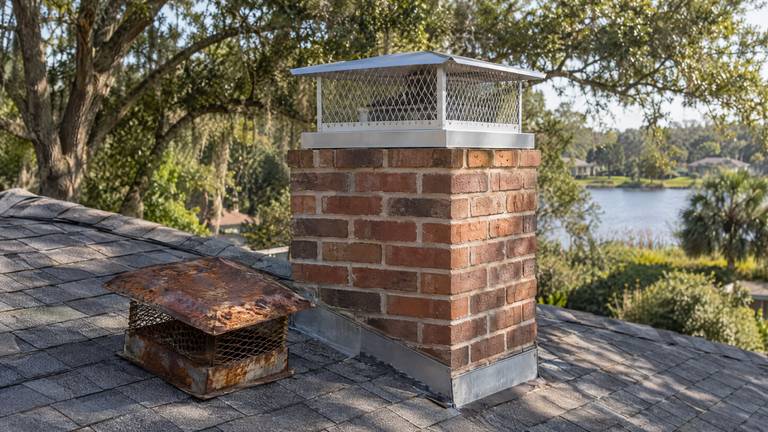
Some caps can be put right with new bolts, a straightened lid bracket or a replacement screen. That works when the frame is square, the metal is solid and the cap still fits the tile.
When the metal is perforated, the mesh has rusted through or the frame is twisted, a repair only delays the next failure. We tell you which case you have, and if a repair is realistic we price it alongside a replacement so you can choose between them.
Protecting the roof while we work
A cap replacement happens on the roof, and the roof has to be in the same shape when we leave. Shingle, tile and metal roofs each need their own care, from where the ladder stands to where tools and the old cap are set down.
We carry the old cap down, clear drill dust and adhesive from the crown and look over the roof around the chimney before leaving. If we see damaged roofing near the chimney, we point it out so you can decide whether to have it looked at.


