
Our Services
Chimney caps measured, fitted and checked
We explain what a new cap will do for your chimney, and what it will not, before any work starts.
Water in the firebox and the cap
Water on the hearth, a rusty damper or a musty smell after rain often starts at an open flue. A cap is the first thing we check, because it is the simplest fix when it is the cause.
Leaks also come through cracked crowns, loose flashing and porous brick, and a new cap does nothing for those. We trace where the water enters before recommending a cap, so you do not pay for one part while another keeps leaking.
What we look at on the roof
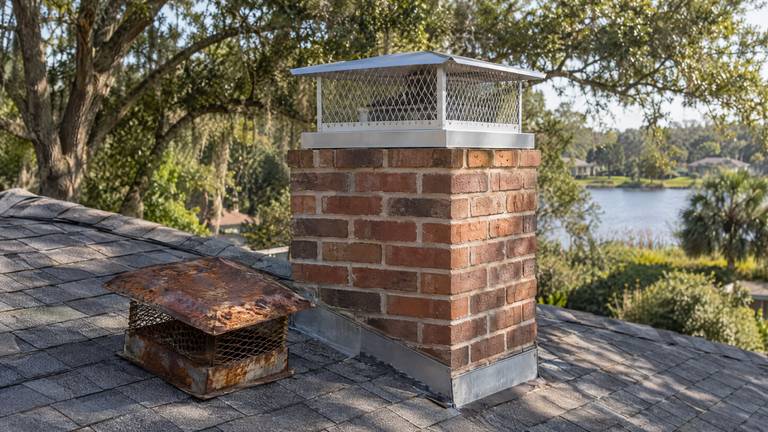
A cap inspection covers more than the cap. We measure every flue, check each tile for cracks and chips, look at the crown the cap sits on, note the flashing where the chimney meets the roof and look into the flue for nests and debris.
You get what we found in plain language, with a written price for the cap and a separate line for anything else that needs attention. The inspection is free, and nothing is ordered until you approve it.
Options priced in writing
Most chimneys have more than one reasonable cap choice. A single-flue cap in stainless steel, a copper version or one cap over several flues can all work, and they differ in look and price. Where a crown-mounted cap and single-flue caps both fit, we show you how each one handles the flues and the crown.
Every choice goes on the estimate with its own price and a plain note on what it changes. You pick, there are no hidden fees, and your pick is 10% off if you schedule it inside the 72-hour window after the inspection.
Oversized and undersized caps
An undersized cap may not slide over the tile, or it gets forced on and cracks it. An oversized cap may be fastened with long bolts that barely reach the tile, leaving it free to move in the wind. Both happen when a cap is bought before the flue is measured.
When stock sizes do not fit, a cap can be made to the flue's measurements. We explain the difference in price and lead time, and we fit a stock cap only when it truly fits your chimney.


