
Chimney Services
What creosote removal involves in Geigers Landing
The follow-up sweep that finishes the job
When the poultice has dried, the PCR data sheet says the surface looks cracked and part of the material will already have dropped into the thimble, onto the smoke shelf or into the firebox. The rest comes off with normal sweeping. The sweep also removes any product left in corners the dried material did not fall from.
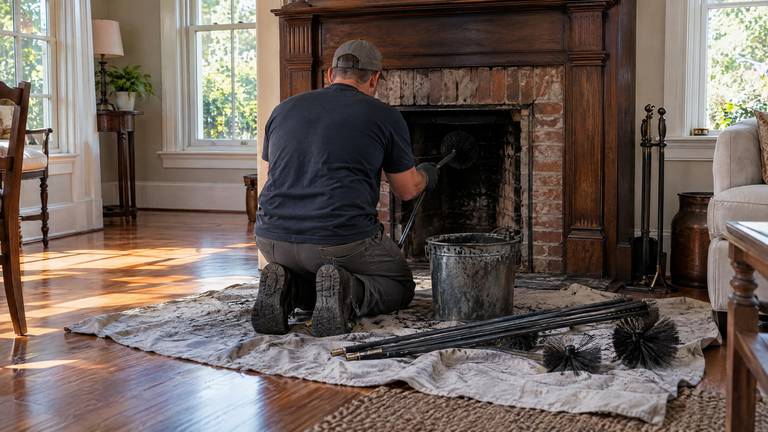
That sweep is part of the removal and appears on the estimate. Our crew brushes the flue, clears the smoke shelf and firebox, bags the debris and leaves the hearth clean, then shows you what came out of your Geigers Landing chimney.
Powder modifiers for glaze in a working flue
A different approach uses a powder modifier. SaverSystems' Cre-Away data sheet describes a four-component powder that turns glazed creosote into a more brittle form, which loses its adhesion through heating and cooling so it can be swept out more easily.
The data sheet says to apply it directly into the chimney and not in the fire, then burn a fire to trigger its catalyst, repeating with each new fire for about a week before the chimney is cleaned. Because it relies on continued fires, we suggest it only where an inspection has found the flue sound enough to use.
Creosote removal from a stainless steel liner
Stainless steel chimney liners appear alongside clay flue tile on the PCR data sheet's list of surfaces the product is made to clean. For routine cleaning of its own stainless liners, DuraVent calls for appropriately sized polypropylene chimney brushes and flexible fiberglass rods.
The liner in your chimney is identified before the method is chosen, and brushes and tools are matched to its size and material. After the deposit is out, the liner is checked along its length and at its connections at the top and bottom. A bent or crushed section is noted and explained, since it affects both cleaning and draft.
Two or more flues in one chimney
A chimney can hold several flues, each serving its own fireplace or appliance, and each can carry its own deposit. One flue may be glazed while its neighbor needs only a sweep. A fireplace flue and a stove flue in the same chimney can also call for different removal methods.
Our specialists inspect each flue separately and price them separately, so you pay for removal only where it is needed. The estimate names which flue is which, so there is no confusion on the day of the work. If only one flue needs treatment, the others stay usable where it is safe, and we say so in writing.


