
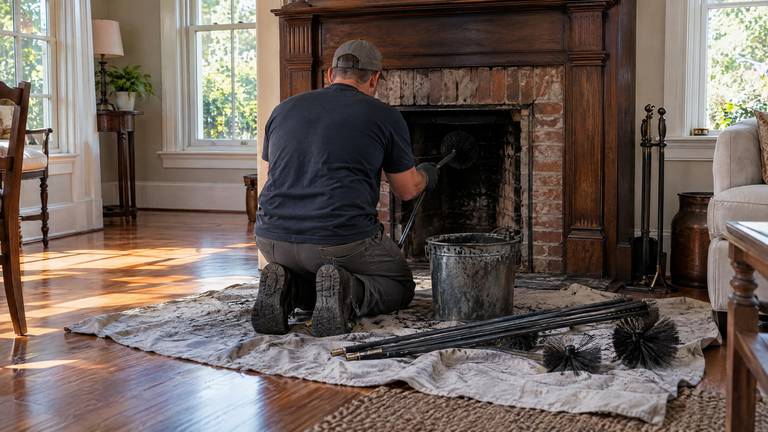
Distinguish a difficult deposit from ordinary soot
Deposits vary in condition and attachment to the flue surface. Loose material may respond to routine sweeping, while a hardened or glazed layer can resist ordinary brushing. Heavy creosote removal begins with identifying that difference and assessing the surface beneath and around it.
The term stage 3 creosote removal is often used for difficult glazed buildup. It does not name a single treatment suitable for every chimney. The method must account for the lining, access and deposit condition. We explain those factors instead of promising that a standard cleaning visit will remove every hardened layer.
Select a method that suits the lining
Glazed creosote removal may involve a specialized mechanical approach or a treatment intended to modify the deposit for removal. Any product or tool must be used according to its instructions and within the limits of the chimney system. Aggressive action that damages the lining is not a successful cleaning result.
We discuss the expected sequence before work starts. Some conditions can require more than one treatment or a follow-up assessment.
A product applied to the deposit is not, by itself, evidence that the material has been removed. The result needs review after the appropriate process is completed.
Understand what the deposit may conceal
A thick layer can hide cracks, open joints or deterioration in the lining. Chimney creosote removal can expose those conditions, but it cannot repair them. If the surface remains obscured or damage is found, the fireplace may need to remain unused while the next step is decided.
Our chimney flue repair and chimney liner installation services address different lining problems. Relining is not automatically required whenever glaze appears, but it may be appropriate where the flue cannot be made suitable through supported cleaning and repair.
Prepare the fireplace without disturbing the buildup
Keep the fireplace unused before the appointment and follow the team's cooling instructions. Leave the deposit in place for assessment rather than scraping an unfamiliar surface or adding a product. Tell us about previous treatments, unusual fires and any earlier recommendation to stop using the chimney.
We plan access and protection around the fireplace before creosote cleaning begins. If an insert or connector limits access, the appliance instructions affect removal and reassembly. The proposal should identify the passage and components included so treatment of one accessible section is not mistaken for cleaning the entire system.
Review the result before returning to use
After treatment, we explain what was removed, any remaining buildup and the condition that could be assessed. Continued restrictions should be clear. A cleaner-looking firebox does not establish that deposits farther up the chimney have been resolved.
Discuss the connected appliance and your normal use during the visit. Future maintenance follows the appliance instructions and the findings rather than a guarantee that buildup will never return. Our chimney sweep service handles routine cleaning when that is the appropriate next appointment.
For an uncontrolled fire, a suspected chimney fire or a carbon monoxide alarm, leave the building and call 911 from outside first. Do not test the fireplace afterward with another fire. Once the emergency is addressed, contact (645) 465-4122 for a free inspection of the deposit and lining concerns. Treatment and repairs are separately priced before work proceeds.
