
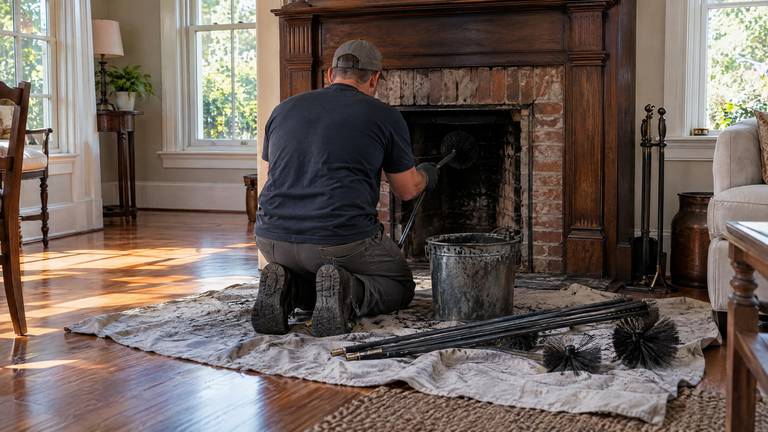
Start with the last completed appointment
The date written on a reminder is not the date the chimney was serviced. Find the last completed visit, the work described and any recommended follow-up. An appointment cancelled because of access or scheduling did not remove deposits or resolve the item that prompted it. If you cannot find the records, say that plainly instead of estimating a maintenance history from how clean the hearth looks.
Separate inspection, sweeping and repairs in your notes. A cap replacement may be well documented while the last cleaning date remains unknown. Likewise, a sweeping receipt may describe deposit removal without settling a previously identified repair. This distinction gives the next technician a sensible starting point and helps you avoid treating several different jobs as one annual task.
Keep the annual check as the fixed point
How often should a chimney be inspected? NFPA's public heating guidance recommends annual professional cleaning and inspection. The inspection provides the opportunity to discuss actual deposits, condition and the appropriate cleaning work. Do not turn a general interval into a promise that every chimney can wait until the same month next year, regardless of what happens in between.
The familiar question of how often to sweep a chimney is therefore best answered with both a date and a reason. Ask when the next check should occur, what would justify an earlier visit and whether a specific finding remains unresolved. A calendar entry that simply says “chimney” can be easy to misunderstand later. Record whether it is a follow-up after repair, routine maintenance or a return to finish an inaccessible area.
Describe a change in use without inventing a formula
A household may start using a fireplace more often, leave it unused, or change the material it burns within the appliance's instructions. Give that history at the visit. There is no useful household calculation that converts the number of evenings by the fireplace into a guaranteed cleaning date. The amount and character of deposits must be considered alongside the actual system.
EPA's archived Burn Wise guidance advises dry, suitable firewood and following the appliance instructions. That supports better operating habits, but good fuel is not a substitute for maintenance. Keep the distinction clear when comparing seasons: describe the change rather than concluding that a different wood supply has made inspection unnecessary.
For a Seminole County household, plan around the dates when you actually expect to use the fireplace. The county name alone does not establish how much any particular home burns. Book early enough to leave room for recommended work before the first planned use.
When the old date no longer answers the question
A visible change in condition deserves attention even if the previous appointment was recent. A fallen component, unexplained debris, water entering the fireplace or an operating problem cannot be dismissed because the calendar says maintenance is months away. Leave the fireplace unused when its condition is uncertain and explain what changed.
Do not light a test fire to see whether the schedule can be extended. When flames spread beyond the firebox, a chimney fire is suspected or a carbon monoxide alarm sounds, get everyone out and then call 911. Routine scheduling comes after the immediate emergency has been addressed.
For nonemergency changes, keep a short factual account: when you first noticed the issue, whether the fireplace had been used and what work had recently occurred nearby. Avoid climbing onto the roof or reaching into the chimney to collect more detail.
Bring a short maintenance record
Useful records do not need a special application or a detailed daily diary. A folder with the previous invoice and the appliance instructions can be enough. The aim is to distinguish completed work from recommendations still awaiting approval.
A practical list for the next visit
- Identify the fireplace or appliance by its room and the model information already available in your paperwork. Two openings in one house may have different service histories.
- Keep the last completed cleaning and inspection dates separate. Include a repair invoice when it explains why a component was replaced.
- List deferred work in ordinary language. Ask whether a postponed item affects using the fireplace or only the timing of a later maintenance task.
- Mention a meaningful change in use, fuel or operating behavior. The technician needs context, not a precise count of every fire.
- Ask for the next recommended step before the appointment ends. Write down the reason for it so a later reminder still makes sense.
If the appointment could not be completed
Ask which parts were reached, which work was completed and what prevented the rest. A roof access issue, unavailable room or other limitation should have a clear next step. Do not reset the maintenance calendar as though the original scope had been finished merely because someone attended the property.
Agree who will arrange access and whether another visit is necessary. If another contractor's work must happen first, keep that dependency with the booking notes. This avoids repeatedly scheduling the same incomplete visit. It also helps a different household member understand why the follow-up matters when they are the person answering the phone.
Set a useful reminder after the assessment
How often should a chimney be cleaned at your home? Keep the recommendation tied to the findings from that home's visit. Note the target date, the job to book and any condition that calls for earlier attention. This is more useful than copying a neighbor's schedule or assuming that a lightly used fireplace can be ignored indefinitely.
Arrange chimney sweep service with Seminole County Chimney at (645) 465-4122. Our inspection is free, and recommended work is explained before you approve it. Bring the last service record if you have it; if you do not, we can begin with the condition of the system and the history you know.
Sources
- NFPA heating safety: Professional chimney maintenance and annual service planning.
- EPA Burn Wise: best practices: Dry firewood and following the appliance instructions; archived EPA guidance.

