
Our Services
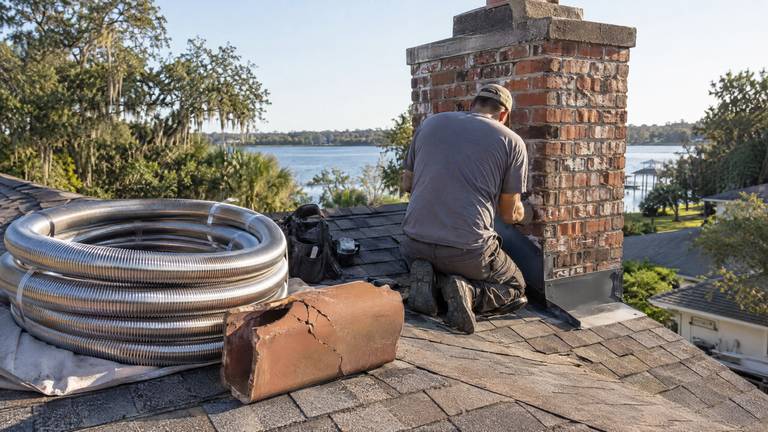
How we install chimney liners in Woodruff Springs
The relining plan is explained on site, and a same-day inspection in Woodruff Springs is possible when the schedule allows.
Cleaning before the liner goes in
One manufacturer asks for the chimney and smoke chamber to be swept clean of soot and creosote, glazed deposits included, before its liner is installed. Deposits left behind the new liner can still smoke or smell.
We clean the passage as part of the relining work, or ahead of it when the deposits are heavy. The cleaning is priced in the estimate, and anything the cleaning reveals about the old lining is explained before installation continues. Cleaning also lets the route test run through a clear passage, which gives a truer answer about whether the chosen liner will pass.
Offsets and changes in direction
An offset shifts the flue to one side between the fireplace and the roof. The building code limits offsets in masonry chimneys, and at the bend the usable space inside the flue is smaller than at the top or bottom.
We check offsets during the route test and choose a liner that can make the turn without losing its shape. When an offset is too tight for the size the appliance needs, we explain the alternatives before any work is booked. The route test result is shared with you, so the reason for the chosen size is clear.
Crown repairs before the top plate
Cracks in the crown are to be repaired before the liner is installed, according to one liner maker's instructions. The top plate and cap need a sound surface to seal against.
When the crown needs more than crack repair, we explain whether it should be rebuilt before relining. The crown work is priced on its own line, so you can see it next to the liner system and decide with both in view. A new top plate set on a failing crown would leave the new liner exposed to the same water the crown lets in.
Joining two liner lengths
When a single length cannot cover the run, two lengths can be joined with a connector made for the system. The joint has to follow the maker's instructions to stay sealed and secure inside the flue.
We avoid unnecessary joints and place any required joint where it will be sound. The joining parts come from the same listed system as the liner, never from a different maker. Where a joint is needed, its location is noted in the system details you keep.


