
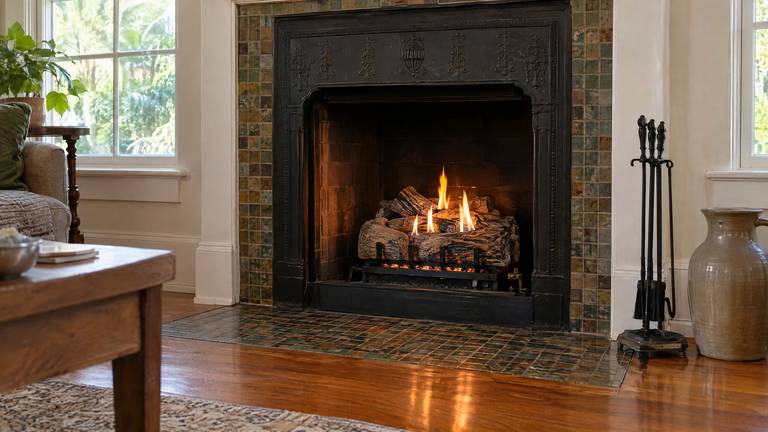
Gas Fireplace
From firebox check to first flame
Gas log installation from local technicians who follow the manual to the last ember.
Propane supply rules for a log set
Propane sets carry strict supply rules. One maker's manual requires the propane source to be regulated, located outside and hard-piped into the fireplace, and forbids a rubber hose or flexible connector run into the fireplace, a tank or cylinder inside the home and any connection to an unregulated tank.
The tank, the regulator and the line to the fireplace belong to the propane supplier or a gas contractor. We check what is there, name anything missing in the quote and fit the set once the supply meets the manual. Where a propane line already reaches the fireplace, we check its connection and regulator arrangement against the manual before quoting a set for it.
The first hours of burning
New burners and logs are treated with oils and paints during manufacture, and those burn off the first few times the set runs. One maker describes the smoke and smell as normal and calls for a break-in period of four to six hours with as much ventilation as possible, windows or doors open.
We light the set with you at the end of installation, explain what the break-in smell is and how long to expect it, and tell you what would be out of the ordinary. That way the first evening holds no surprises. If the smell continues well past the break-in period, or it changes, turn the set off and ask for it to be checked.
Logs from one set do not suit another
Logs from different sets can look alike and still burn very differently. Their shape, weight and position are designed around one burner. Pieces borrowed from another set can sit in the flame, collect soot and change the combustion.
Use the components the maker specifies for your set, and buy replacement logs or ember material from that maker. If the original parts are no longer available, we explain the choices, which usually means a new matched set. We identify the set during the free inspection and tell you whether matching parts can still be ordered, before you spend money on pieces that might not fit.
Preparing the firebox for a vent-free set
Vent-free sets bring their own preparation rules. One maker's manual requires any outside air duct or ash clean-out door in the floor or walls of the fireplace to be permanently sealed with heat-resistant sealant before installation, while the chimney damper itself is never sealed. Those openings would let drafts reach the burner from below, which is why the manual asks for them to be closed off.
Those openings are found during the inspection, and the sealing work is listed in the quote. With the firebox prepared, the burner goes in on a clean, sealed floor exactly as the manual describes.


