
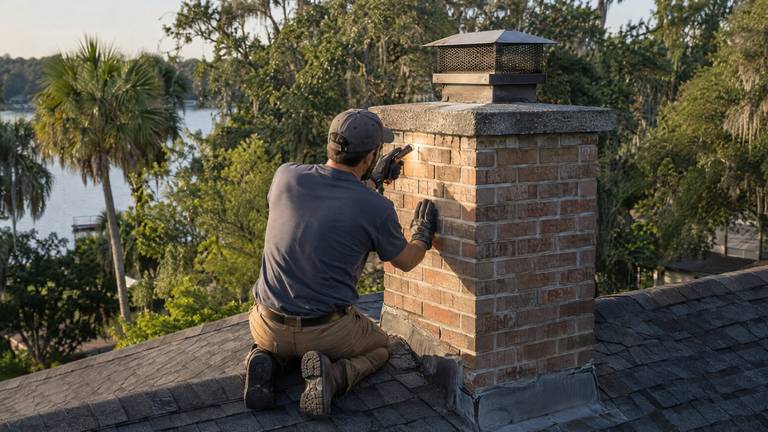
Chimney Inspection
Chimney inspection details for Woodruff Springs homes
No pressure after the visit, and every recommended job is priced in writing before you decide.
The smoke chamber above the damper
Between the damper and the flue sits the smoke chamber, a sloped space that guides smoke into the lining. Rough or stepped walls, open joints and heavy deposits here affect both the draft and the safety of the fireplace.
We inspect the chamber from the fireplace opening with the damper open and a strong light. Corbeled brick left exposed, cracks through the parging and gaps where the chamber meets the flue are each noted. If the surface needs parging or cleaning, we explain why and include the work in a written estimate, separate from the free inspection.
Chase top and storm collar
A metal chimney inside a framed chase is closed at the top by a metal chase cover, with a storm collar around the pipe. When the cover sags or rusts, water can collect and run into the chase.
In one fireplace maker's instructions, the chase top has to pitch downward, away from the opening for the pipe. We check the slope, the seams, the collar seal and the cap above. Rust-through, standing water and a collar that has slipped down the pipe are each noted with a recommendation to repair or replace the part.
Nests and animals in the flue
Birds, squirrels and other animals can enter an uncapped flue or a torn screen. Nesting material can block the passage and hold moisture against the lining.
Chimney swifts nest inside chimneys and are protected by the Migratory Bird Treaty Act, so an active nest limits when the flue can be disturbed. We identify what we see and explain the options and timing before any removal is planned. Once the flue is clear, a properly fitted cap keeps the next visitor out.
Stucco finishes over the chimney
A stucco finish covers the masonry or framing beneath it, so damage may show only as fine cracks, stains or a hollow sound when the surface is tapped.
We look closely at the finish around the crown, along the roof line and at the corners, where movement and water meet. Where the finish is damaged, we explain whether it looks like a surface repair or a sign of water behind it. A stucco repair that seals over wet material only hides the problem, so the source of the water comes first.


