
Chimney Services
What creosote removal involves in Whites Landing
Wood stoves with catalytic combustors
Each removal product has appliances it suits and appliances it does not. The Cre-Away data sheet says the powder is not recommended for wood stoves with catalytic combustors, and a stove's own manual sets out how its flue and connector are to be cleaned.
So we ask about the appliance before choosing a method. If your Whites Landing home heats with a catalytic stove, the removal plan is built around its manual, and we tell you which options that rules out. Where the manual allows only brushing, we say so plainly and plan the removal within those limits.
Cool flue walls and condensation
A chimney that is cooler than normal is the third condition EPA lists, because smoke condenses more readily on cool flue walls. Slow fires that never bring the flue up to temperature leave more of their smoke behind on the way out.
When we find glaze, we look at how the fireplace is typically used and whether the flue and the appliance suit each other, and we explain what we see in plain terms. Sometimes the fix is a habit, sometimes it is a change to the flue, and the estimate says which.
Glaze in the smoke chamber
The smoke chamber, the sloped space between the damper and the flue, collects deposits too. The PCR system includes a separate sprayer for removing glazed creosote from smoke chambers, and treating that space is a separate step from treating the flue above it. Deposits there sit close to the fire and are easy to miss from the top of the chimney.
We include the smoke chamber in the free inspection and price its treatment on its own line. If the chamber's surface turns out to be rough or cracked beneath the deposit, smoke chamber repair is explained as a separate job.
Creosote removal from a stainless steel liner
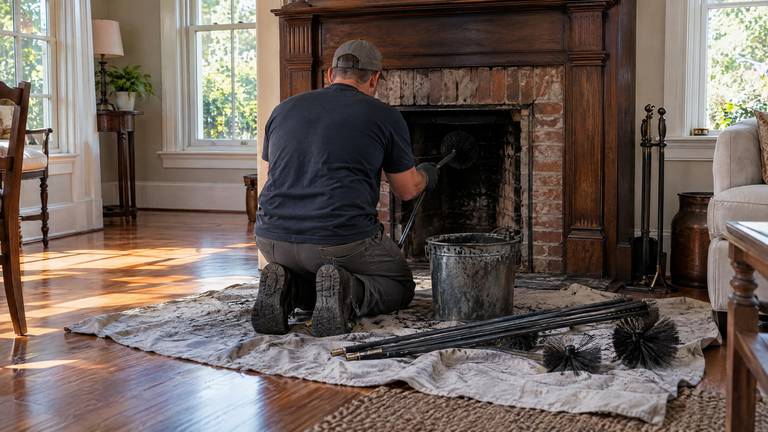
Stainless steel chimney liners appear alongside clay flue tile on the PCR data sheet's list of surfaces the product is made to clean. For routine cleaning of its own stainless liners, DuraVent calls for appropriately sized polypropylene chimney brushes and flexible fiberglass rods.
The liner in your chimney is identified before the method is chosen, and brushes and tools are matched to its size and material. After the deposit is out, the liner is checked along its length and at its connections at the top and bottom. A bent or crushed section is noted and explained, since it affects both cleaning and draft.


