
Our Services
How we inspect a chimney from top to bottom
Any service your inspection leads to is 10% off when booked within 72 hours.
Cap, screen and how the cap is fastened
A chimney cap keeps rain from falling straight into the flue and gives birds and animals a barrier. We check that the cap is present, fastened securely, free of heavy rust and clear of leaves or debris that could restrict the flow of exhaust.
The screen matters as much as the lid. A torn mesh lets animals in, and a clogged one holds back smoke. We also look at how the cap is attached, since a cap resting loosely on the tile can lift in a storm. If the cap should be replaced, we explain the size and material that suit the flue and price the replacement on its own line.
Brick faces and mortar joints
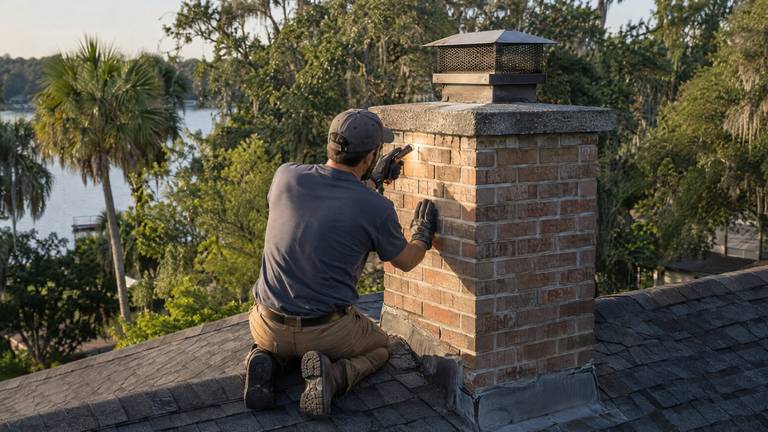
Every face of a masonry chimney gets a look for cracked or flaking brick, open joints, leaning and white mineral deposits. Those deposits show where water has moved through the wall and dried at the surface.
We note where the damage is concentrated and whether it sits at the surface or deeper in the joint. Damage on one face only can point to how rain reaches the chimney, while damage near the roof line can point to the flashing. That tells you whether repointing, brick replacement or a larger repair is worth pricing, and in what order the work makes sense.
Mantels and trim near the heat
Wood mantels, trim and decorative panels must stay a set distance from a masonry fireplace opening, and the allowed distance depends on how far the material projects. A remodel can move these parts closer than the original builder placed them.
The mantel, the surround and any shelving near the opening are checked against the clearances that apply, and we explain where each stands. For a factory-built unit, the maker's installation instructions govern these distances instead. If something sits too close, we explain the options, from moving the trim to changing the material.
Siding and trim on a framed chase
A framed chase is part of the house wall as much as part of the chimney. Gaps in the siding, open trim joints and failed sealant around the chase can let rain into the framing around the metal chimney.
We look for soft or stained siding, swollen trim and water marks inside the chase where it can be seen. Damage to the chase framing is noted with the work it would need, and siding repairs outside our scope are named so the right trade can handle them.


