
Our Services
Chimney caps measured, fitted and checked
How a cap gets measured, chosen and fastened so it stays put on your Whites Landing chimney.
What a chimney cap is there to do
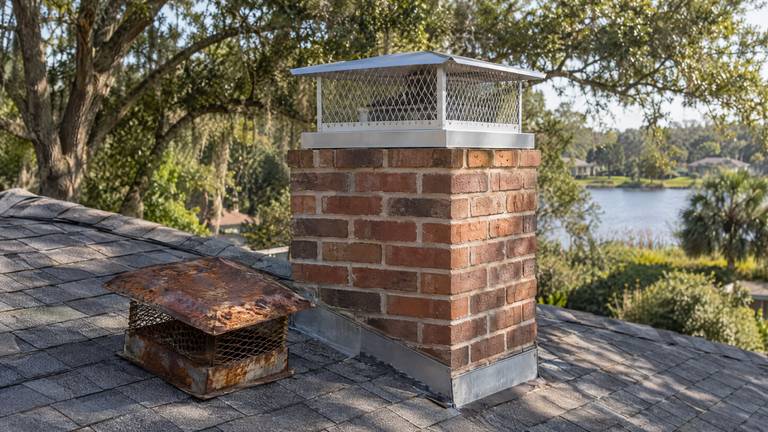
A chimney cap sits on top of the flue and does several jobs at once. Its lid turns rain away from the opening, its sides keep leaves and nesting material out, and its screen stops animals from climbing in. On a wood-burning fireplace, the same screen can catch embers before they reach the roof.
None of those jobs should block the exhaust. A cap that restricts the opening can slow the draft and send smoke back toward the fireplace. We choose each cap with both halves in mind, what it keeps out and what it has to let through.
Rust streaks below the cap
Orange or brown streaks on the crown or down the brick usually start at the cap. When the coating on a steel cap wears through, rain carries rust across whatever lies below it. The stain is a cosmetic problem at first and a warning that the metal is thinning.
Replacing the cap with a corrosion-resistant one stops new staining. Existing streaks on brick can often be cleaned, and we tell you which masonry cleaners suit your chimney before anything touches the face of the brick.
Chimney swifts and your capping decision
Chimney swifts build their nests on the inside walls of chimneys while they breed. Federal law, the Migratory Bird Treaty Act, makes it illegal to harass, injure or kill the birds or to disturb their eggs or nests, as the U.S. Fish and Wildlife Service points out. They reach the country in March or April and head south in August or September.
The same agency asks owners not to cap a chimney just to keep wildlife out, and it advises capping a flue with a metal lining so birds are not trapped inside. The decision is yours, and we never fit a cap over an active nest.
Rattling or whistling from the cap on windy days
A cap that rattles in the wind is telling you something has loosened. The lid bracket may have bent, a bolt may have backed out or the cap may be shifting on the tile. A high whistle can come from damaged mesh or a lid that has dropped out of line.
Noise is worth checking before a storm finishes the job. We find the loose part, tighten or replace it and show you what moved, so you know whether the cap has more life in it or needs replacing.


