
Chimney Services
Chimney cap work for Sanlando Springs homes
Same-day cap service is available in Sanlando Springs when the schedule allows.
Spark arrestor mesh that meets the code
Arrestor screens on masonry chimneys are spelled out in the Florida Building Code. Mesh openings have to be small enough to catch a half-inch sphere yet large enough to pass a three-eighths-inch one, and the screen material has to match the heat and corrosion resistance of 19-gage galvanized or 24-gage stainless steel.
NFPA 211, the national standard for chimneys and fireplaces, also addresses spark arrestors. We fit screens that meet the code in place of the finest mesh on the shelf, since mesh that is too fine clogs with soot and restricts the flue.
Stainless steel, copper or painted steel
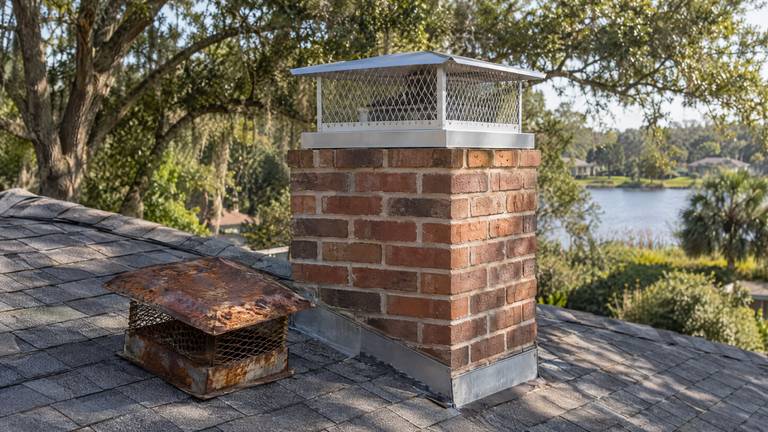
Stainless steel is the usual choice for chimney caps because it resists rust and holds its shape. Copper costs more, weathers from bright to brown to green and suits some homes by design. Painted or galvanized steel costs least at purchase and is the first to rust once its coating wears.
The Brick Industry Association advises that a metal rain cap should be corrosion-resistant. We show you the metals available for your flue size, how each will look on your roof and the written price of each option.
Decorative shrouds on metal chimneys
A decorative shroud can make a chase top look finished, but it also changes how heat and exhaust behave around a metal chimney. Under the Florida Building Code, a shroud may sit at the top of a factory-built chimney only when it carries a listing and label for use with that exact chimney system and goes on per its maker's directions.
If you want a shroud, we check whether one is listed for your system before quoting it. If an existing shroud has no listing for the chimney beneath it, we explain the concern and the options in writing.
The crown the new cap sits on
Every cap depends on the masonry around it. For masonry chimneys, Florida's code asks for a sloped top of concrete, stone or metal that sheds rain, ends in a drip at its edge and is kept separate from each flue liner by a caulked joint so the two can move. The code calls it a cap too, while the trade calls it the crown.
A cracked or crumbling crown loosens fasteners and lets water in beside the flue even with a perfect cap above it. We check the crown at the same visit and price any crown repair on its own line.


