
Our Services
Leak repair details for chimneys in Sanlando Springs
Local specialists, upfront pricing and a 100% satisfaction guarantee on every leak repair in Sanlando Springs.
Controlled water testing
When inspection alone cannot separate the possible paths, a controlled water test can. Water is applied to one area at a time, starting low and working upward, while someone watches inside for the first sign of moisture.
Testing one area before the next keeps the result readable. A broad soaking of the whole chimney only proves that water gets in somewhere. We explain in advance what each test can show, how long it will take and how the room will be protected while it runs. A test that shows nothing is reported as exactly that, with its limits.
Rain or condensation
Burning a fuel produces water vapor along with other gases. In a flue that is too large or too cold for the appliance it serves, the vapor can condense on the cold flue walls and trickle down inside the chimney.
The timing tells the two apart. Rain leaks follow storms, while condensation follows use of the appliance, sometimes on dry days. If the evidence points to condensation, sealing the outside of the chimney will not help, and a correctly sized liner becomes part of the conversation.
Separating chimney work from roof work
Water that shows near a chimney does not always come from it. Roofing beside the chimney, a skylight, a vent or a gutter above can send water to the same ceiling.
Our inspection of the chimney and its flashing tells you plainly when the evidence points to a roof defect instead. That way the chimney repair covers the chimney, the roofer handles the roof and you are not asked to pay for work that would not stop the water.
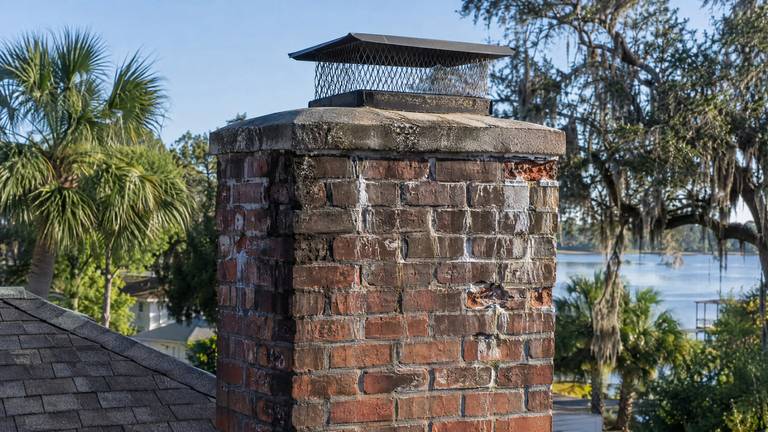
Crown coatings for hairline cracks
A crown with fine surface cracks but sound concrete underneath can be sealed with a flexible coating made for chimney crowns. The coating bridges the cracks and sheds water while the crown keeps its shape.
A coating is not a substitute for a crown that is broken through or holding water. We tell you which condition the crown is in and why, and the coating is applied to its maker's instructions on a clean, dry surface.


