
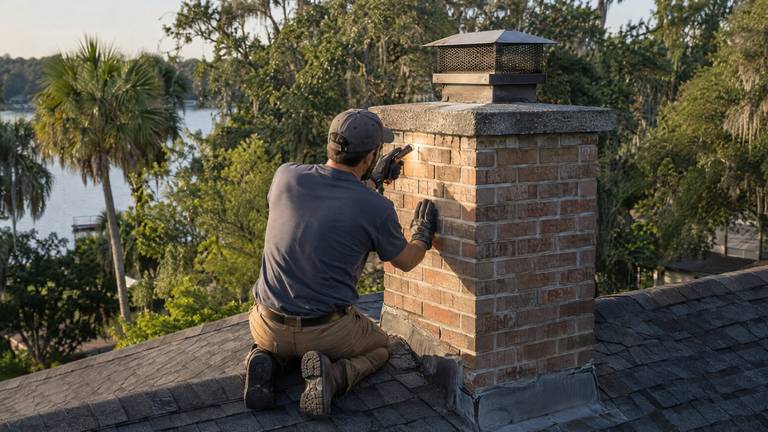
Chimney Inspection
Chimney inspection details for Sanlando Springs homes
No pressure after the visit, and every recommended job is priced in writing before you decide.
The damper and the throat
We open and close the damper, check how the plate seats and look for rust, warping or a broken handle. A damper that no longer seals lets conditioned air escape and lets rain or insects in while the fireplace is idle.
Rust on the plate is also a clue, since it often means water is reaching the throat from above. If a throat damper cannot be repaired, a top-sealing damper at the chimney top is one alternative. We explain which option fits the flue and the way you use the fireplace, and each option is priced separately so you can compare them.
Soot and creosote inside the flue
Burning wood leaves soot and creosote on the flue walls. Loose soot brushes out readily, while a hard, glazed layer needs different methods and more time to remove.
We note the type and amount of deposit we see, where it sits in the system and whether a sweep is advisable before the next fire. Heavy deposits can also hide the lining underneath, so the findings say when a clear view of the tile will only be possible after cleaning. A recommended cleaning is priced separately from the inspection, which stays free.
The cleanout door at the base
A cleanout opening near the base of each flue is a Florida Building Code requirement for masonry chimneys. A door that is rusted open or missing can let air, water or animals into the chimney.
We check that the door opens, closes and seals, and we note deposits or debris collected behind it. Debris at the base can also show what has been falling down the flue. A damaged door is a small repair when it is caught early, and it is priced on its own line if you want it done.
Inspections tied to a closing date
Real estate chimney inspections often run on a tight schedule. Tell us the contract dates when you call, along with who will give access to the house.
The findings describe the chimney as it is on the day of the visit. They are not a guarantee about the sale, and they do not replace the other inspections a purchase may involve. Any recommended repair is priced in writing, line by line, so buyer and seller can discuss it with the same information in front of them.


