
Our Process
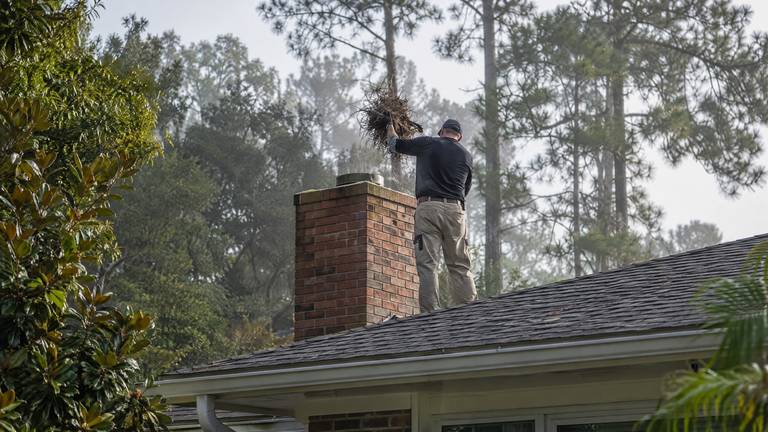
Chimney animal work on Longwood homes
The months that suit capping best
Two calendars shape when a chimney can be closed. Swifts leave in August or September and return in March or April, and Florida prohibits bat exclusion from April 16 through August 14. The late fall and winter months fall outside both. Planning around them avoids a cap going on at the wrong moment.
If you want your Longwood chimney capped before the animals return, booking the free inspection in late summer gives time to identify what used the chimney, clear it and fit the cap within that window. Book within 72 hours of the inspection and 10% comes off the removal and the cap.
Silence does not mean the chimney is empty
Animal activity comes and goes. Swifts are quiet for much of the day, bats rest in daylight, and a squirrel may simply be asleep. A few quiet days prove very little about what is still inside the flue. Nest material and droppings stay behind even when the animal has left, and they still need attention.
Please do not light a fire or close the top on the strength of silence alone. A free inspection of your Longwood chimney confirms whether the flue is empty, whether nest material remains and whether the chimney is safe to use.
When animals keep coming back
If the same chimney keeps attracting birds or animals, the top is almost certainly open to them. A missing cap, a screen with a torn corner or a cap sized for the wrong flue all leave a way in. A new animal can move in within days of the last one leaving.
Removing the animal again without closing the entry just resets the cycle. In Longwood, our specialists find the gap, fix it and fit a screened cap that meets the code, so the next visit is a routine sweep instead of another removal.
The damper as the last barrier
A closed damper keeps an animal in the flue from dropping into the firebox, but it does nothing to keep animals out of the chimney. A damper that no longer closes fully lets droppings, debris and sometimes the animal itself into the fireplace. Its job is to seal the firebox from the flue, and nesting material or droppings on the plate can stop it from closing.
Once the animal is out, the damper on your Longwood chimney gets a look too. If it is warped or its hinge is worn, the repair goes on the estimate, so the room below stays protected while the new cap does the work at the top.


