
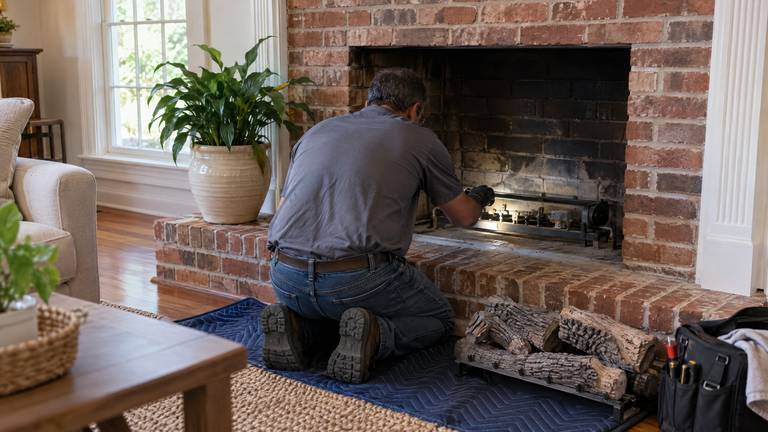
Gas Fireplace
Gas fireplace service for Longwood homes
Start with a free inspection, and we explain the fault before any part is ordered.
How a standing pilot keeps the gas on
Many gas fireplaces with a millivolt control use a pilot flame that burns all the time. On these units the pilot heats two small sensors. A thermocouple tells the valve that the pilot is lit, and a thermopile makes enough current to open the valve for the main burner when you flip the switch. The pilot flame has to wrap around both for this to work.
One maker's service instructions list a pilot flame too small to engulf the thermopile, a dirty or loose thermopile connection and a failing sensor among the reasons the main burner drops out. We check the flame, clean the connections and test the parts before anything is replaced.
Black soot on the glass or the logs
Soot inside a gas fireplace is a symptom with a cause. One maker's troubleshooting guide lists flame striking the media, a blocked or misadjusted air shutter, an input rate that is too high, a broken door gasket and leaking vent joints. Each of these changes how cleanly the gas burns.
Cleaning the glass removes the evidence without fixing the fault, so we look for the cause first. If soot appears outside the firebox, on the wall or the ceiling, stop using the fireplace until it has been checked. We clean the deposits once the reason for them has been corrected.
Service for a vent-free fireplace
A vent-free fireplace depends on a clean burner and a clean oxygen depletion sensor pilot, because that pilot is what shuts the unit off if room air runs short. One maker requires the burner and that pilot to be cleaned at least once a year by a qualified service technician, and more often in homes with pets or heavy lint.
The same manual describes the appliance as supplemental heat that must not be left burning unattended or while anyone is asleep. Dedicated vent-free service, including the sensor and room-size checks, is its own service, and we tell you during the visit if your fireplace belongs there.
The first fire after months off
Through the warm months, a fireplace that sits unused collects dust and lint in the burner, the pilot and the control compartment. One maker notes that carpeting, bedding and pet hair can add enough lint to call for cleaning more often than once a year.
A service visit before the first cool evening means the pilot, burner and glass are clean and the controls have been tested before you need them. If the unit lit poorly or smelled odd at the end of last season, mention it when you book so we look at that first.


