
Chimney Services
Liner installation details for Lake Monroe homes
Every liner is sized to the appliance it serves, and the full system is priced in writing first.
Structural repairs come first
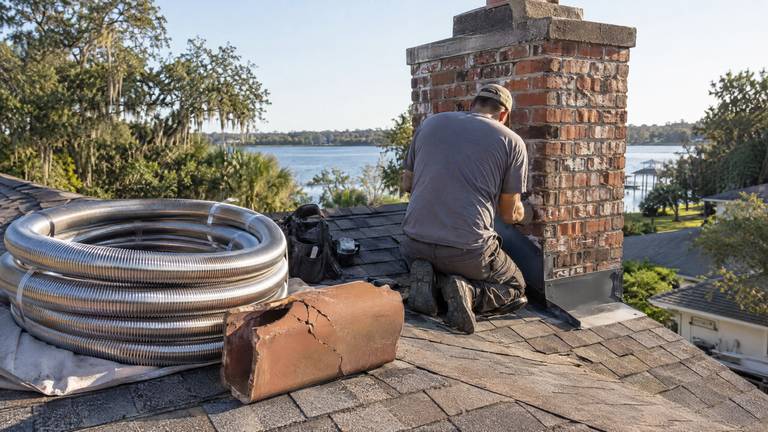
A liner does not hold a chimney together. Missing, loose or cracked masonry and open joints need repair before a liner is installed, as one maker's instructions state.
While the liner is being planned, the chimney structure is inspected, and you learn which repairs have to come first. Each repair is priced separately, so you can see the relining cost and the masonry cost on their own lines and plan them in the right order. Relining over a structural problem would leave the new system inside a chimney that still needs work, and the liner might have to come out again when that work is done.
Reshaping a liner for a narrow flue
Flexible liners can be shaped into an oval to fit a narrow rectangular flue. Reshaping changes the cross-sectional area, as one liner maker points out, so an ovalized liner must still carry enough area for the appliance.
We recommend ovalizing only when the resulting area still meets the appliance's needs and the listing allows it. The size before and after shaping is explained, so the decision rests on the measurements rather than on what happens to fit. The listing and the appliance instructions both have to allow the reshaped liner, not only the space available.
Liners are listed for certain fuels
Each liner system is listed for particular fuels and appliance types. One maker's stainless liner, for example, is listed for oil, gas and solid fuel but excludes certain high-efficiency gas appliances and positive-pressure appliances.
We match the liner's listing to the appliance before recommending it. If an appliance change later brings a different fuel or a different type of appliance, the existing liner's listing has to be checked again rather than assumed. A liner listed for one fuel is not assumed suitable for another, even when the pipe looks the same.
Building permits and local officials
One liner maker's instructions note that permits may be required and that local building and fire officials have the final say on an installation. Requirements depend on the project and the jurisdiction.
If we expect a permit question to arise, you hear it early, and we never present the job as exempt without checking. Any permit step is part of the plan we explain before the work is scheduled. Any conditions an official sets become part of the plan, and the schedule allows for them.


