
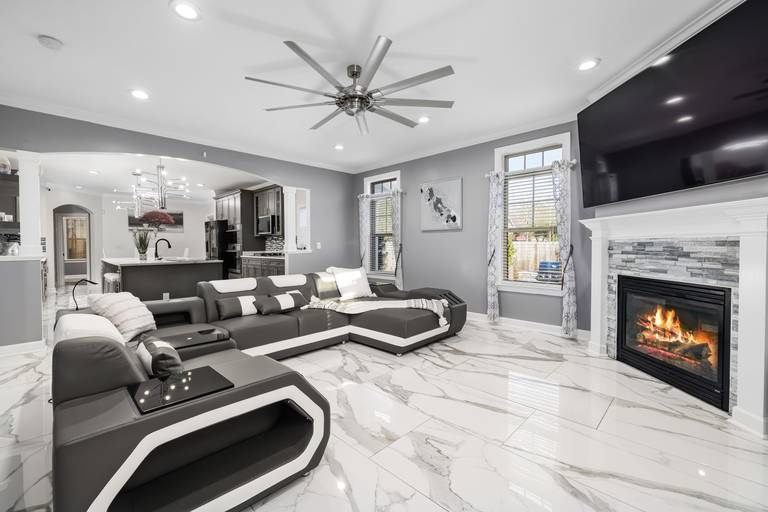
Gas Fireplace
Gas fireplace installation in Lake Charm, part by part
Choosing between direct-vent and B-vent gas fireplaces
A direct-vent gas fireplace is sealed from the room. One maker's manual describes it as drawing all its combustion air from outside and sending all its exhaust outside. A B-vent, or natural vent, fireplace draws its combustion air from the room and sends its exhaust up a vertical Type B vent through a draft hood.
The difference shapes where each can go. A direct-vent unit can often vent straight out an outside wall, while a B-vent unit needs a vertical run to the roof. Our specialists explain which type suits the spot you have in mind in your Lake Charm home before a model is chosen.
Vent caps near porches, decks and soffits
A cap under a porch or deck is allowed only in limited cases. Table 503.8 permits it 12 inches below a veranda, porch, deck or balcony that is open on at least two sides, and prohibits it where only one side is open. One direct-vent manual adds that termination in a screened porch is not permitted.
Roof overhangs matter too. The same manual asks for 18 inches below a ventilated soffit and 30 inches below vinyl soffit material. Our installers check every overhang near the planned cap on your Lake Charm home against the manual for your model.
Mantel height and depth above a gas fireplace
A wood mantel over a gas fireplace has to respect heat rising from the unit. One maker's manual includes a mantel chart: the higher the mantel sits above the top of the fireplace, the deeper it may project. Side walls and mantel legs have their own minimum distances from the opening.
Our installers take the chart from the manual for your chosen model and mark the lowest safe mantel height on the wall before it is finished. If you already own a mantel you want to use in your Lake Charm home, bring its depth to the free inspection.
Coordinating the gas supply for a new fireplace
The gas line to a new fireplace is work for a gas contractor or the gas utility, and we coordinate it with them. The fuel gas code requires new piping to be visually inspected and pressure tested before it is accepted and put into service (406.1), and any additions after the test to be tested too.
Our installation plan names who runs the supply, where it enters the unit and when the test happens relative to the framing and finish. That keeps the sequence clear for everyone working on your Lake Charm home.


