
Our Process
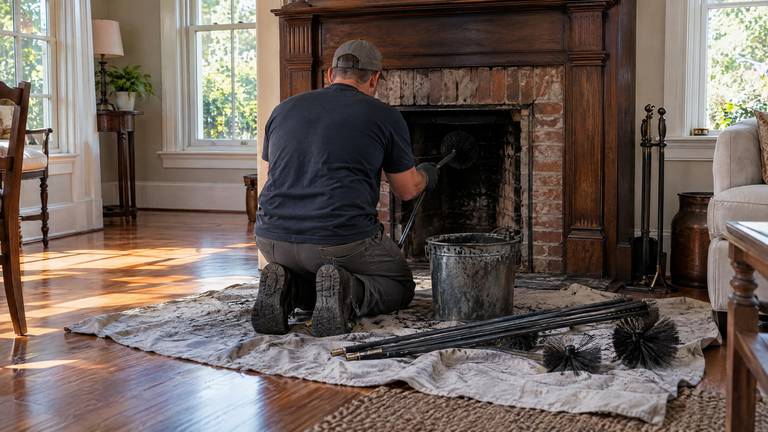
Removing hardened creosote from a chimney in Lake Charm
Why a brush slides over glazed creosote
Creosote builds up in forms that clean very differently. Early deposits are sooty or flaky and come off with a brush, while the hardened, glossy form that removal-product makers call third-degree or glazed creosote bonds to the flue wall and resists ordinary sweeping. It can look like a coat of black enamel on the tile.
A routine sweep therefore sometimes leaves a flue looking dark and shiny. Removing glaze takes a treatment or a tool made for it, and the right choice depends on the liner. Our specialists identify the deposit in your Lake Charm chimney before recommending either.
Wood stoves with catalytic combustors
Each removal product has appliances it suits and appliances it does not. The Cre-Away data sheet says the powder is not recommended for wood stoves with catalytic combustors, and a stove's own manual sets out how its flue and connector are to be cleaned.
So we ask about the appliance before choosing a method. If your Lake Charm home heats with a catalytic stove, the removal plan is built around its manual, and we tell you which options that rules out. Where the manual allows only brushing, we say so plainly and plan the removal within those limits.
Keeping the roof safe during treatment
Removal work happens on the roof as well as at the hearth. The PCR data sheet warns that product accumulating on ladders, scaffolding and roofs can make them slippery, and asks for surrounding areas to be protected from mixing splatter with a tarp or similar cover.
Our crew sets out tarps, keeps the product off the shingles and cleans any splatter before leaving. The area below the chimney is kept clear while we work, and the roof is left as clean as we found it. If the roof is steep or fragile, tell us when you book so the crew brings the right access equipment.
Creosote removal from clay flue tile
Masonry chimneys are often lined with clay flue tile bedded in mortar, the construction BIA Technical Note 19B describes. Those tiles and joints are what a removal method has to protect, and they are also where a crust of glaze can hide cracks.
On a clay-lined flue, our specialists favor methods that loosen the deposit without hammering the tile, and inspect the joints and tile faces once they are clear. Any cracked tile or open joint is explained and priced before the fireplace is used again. Clay tile that has been under a heavy crust for years deserves a close look, joint by joint, from the smoke chamber to the top.


