
Our Services
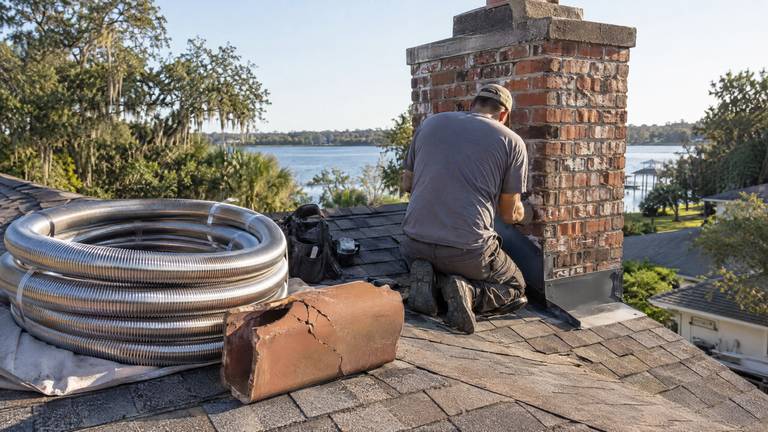
Planning a new chimney liner
Planning and installing a new flue lining in Lake Charm, one step at a time.
The appliance decides the liner
The fuel, the appliance model and the way it connects set the requirements for the liner. A liner that suits one appliance is not automatically suitable for another, even when both would fit the same chimney.
Before recommending a liner, we identify the appliance in use and any appliance you plan to install. If a change is coming, the liner is chosen for the new appliance, so you are not paying to reline twice. The appliance's installation manual is where those requirements are written, so we work from it rather than from rules of thumb.
Proving the route before ordering
Before a liner is ordered, the route is tested with a short piece of liner or a guide cone pulled through the flue. That shows whether the chosen size, with any insulation, can pass the whole way.
A liner forced through a tight spot can be crushed or torn, and that damage may not be visible from either end. Proving the route first keeps the installation day predictable and the price accurate. If the test piece will not pass, we know before the liner is ordered, and the plan can change without waste.
Liners are listed for certain fuels
Each liner system is listed for particular fuels and appliance types. One maker's stainless liner, for example, is listed for oil, gas and solid fuel but excludes certain high-efficiency gas appliances and positive-pressure appliances.
We match the liner's listing to the appliance before recommending it. If an appliance change later brings a different fuel or a different type of appliance, the existing liner's listing has to be checked again rather than assumed. A liner listed for one fuel is not assumed suitable for another, even when the pipe looks the same.
Care after the liner is installed
A new liner still needs inspection and cleaning. NFPA advises having chimneys inspected every year, and a liner is inspected and swept with methods that suit its material.
We leave you the cleaning guidance for the installed system and explain which brushes and methods its maker allows. Future service can then follow the same instructions the installation did. A yearly visit also confirms that the cap, the top plate and the bottom connection are still sound.


